
Think about the last time a political argument left you baffled about how anyone could believe that. Now ask a different question: who benefits when you feel that way? Understanding polarization starts there.
Quick answer: Polarization is the growing split of a society into opposing camps, with fewer people in the middle and more distrust between the sides. In America it has several causes, from party sorting to media models built on attention, and many of them are driven less by villains than by incentives that reward conflict.
What Is Polarization? A Plain Definition
Polarization means people and institutions moving toward opposite ends of a spectrum. Picture a magnet: the force pulls things toward two poles and away from the middle. In politics, that means two camps pulling apart.
Researchers separate it into two kinds, and the difference matters.
Ideological polarization
This is disagreement over what government should do: taxes, healthcare, immigration, the role of courts. Some of this is simply democracy working. A free country is supposed to contain real disagreement.
Affective polarization
“Affective” means emotional. This is dislike and distrust of the other side as people, not just their policies. Surveys over several decades show that Americans have become more negative toward the opposing party, and many now describe its members as a threat to the country’s well-being.
The second kind is the more worrying one. You can disagree with a neighbor about a policy and still share a fence, a school board and a town. It is much harder when you see that neighbor as an enemy.
Is America Really More Divided Than Before?
Mostly yes, with some caveats. Political scientists who track congressional voting find the two parties have moved further apart since roughly the 1970s, and the overlap between them has nearly vanished. Survey data also shows rising hostility toward the other party over recent decades.
But three caveats are worth keeping in mind:
- The public is less extreme than it looks. On many specific issues, large numbers of Americans hold mixed or moderate views. The loudest voices are not a random sample.
- We often misjudge each other. Studies repeatedly find that people overestimate how extreme and hostile the other side is. That is an interpretation researchers debate in detail, but the pattern of exaggerated perceptions shows up in many surveys.
- We have been here before. The decades before the Civil War, the Gilded Age and the 1960s and early 1970s all featured deep conflict, and some involved violence. Our plain guide to the American history that explains today shows how often these tensions recur.
Polarization is less a story of bad people than of good people responding to bad incentives.

The Incentives Driving the Divide
Here is the core idea behind this publication. When you want to understand why something keeps happening, ask who is rewarded for it. This is a simple version of systems thinking: look at the structure, not just the people inside it. Almost no one sets out to divide the country. But many systems pay people more when the country is divided.
Here is a map of who gets rewarded and how.
| Player | What they need | What conflict gives them |
|---|---|---|
| Media outlets | Audience, ratings, subscriptions, ad revenue | Outrage and fear hold attention better than nuance |
| Social platforms | Time on app, ad impressions | Emotional content spreads fast and keeps people scrolling |
| Political candidates | Votes, volunteers, donations | Fear of the other side motivates donors and turnout |
| Parties and committees | Fundraising, loyalty | An enemy is a powerful fundraising message |
| Advocacy groups | Members, money, relevance | Urgent threats bring in support |
| Voters like us | Belonging, certainty, status | Siding with a team feels good and is socially rewarded |
Notice that no row requires a villain. A news editor chasing readers, a candidate chasing donations and a platform chasing engagement each make a rational choice inside their own incentives. Together they produce a system that pays for conflict. The incentives-in-politics approach is a tool you can use on any political fight, not only this one.
The Attention Economy: How Media Profits From Anger
Attention is the currency of modern media. Whether through advertising or subscriptions, outlets and platforms earn more when you stay engaged. And research on how content spreads suggests that emotionally charged material, especially anger and moral outrage, tends to travel farther than calm, balanced material.
Cable news, talk radio, newsletters and social feeds all adapt to this. Audiences are fragmented into niches, and each niche gets content that confirms what it already believes and describes the other side at its worst. That is a business strategy, not a conspiracy.
Two honest cautions. First, social media is probably an amplifier, not the original cause: polarization began rising in America before social platforms existed, and researchers still argue about how large their effect is. Second, partisan media exists on every part of the spectrum. Our media literacy guide explains how framing, headlines and selection shape what you believe, and how to spot it from any direction.
How Our Political Rules Reward Extremes
Media is only part of the picture. The rules of American elections also shape behavior.
A two-party system with winner-take-all elections
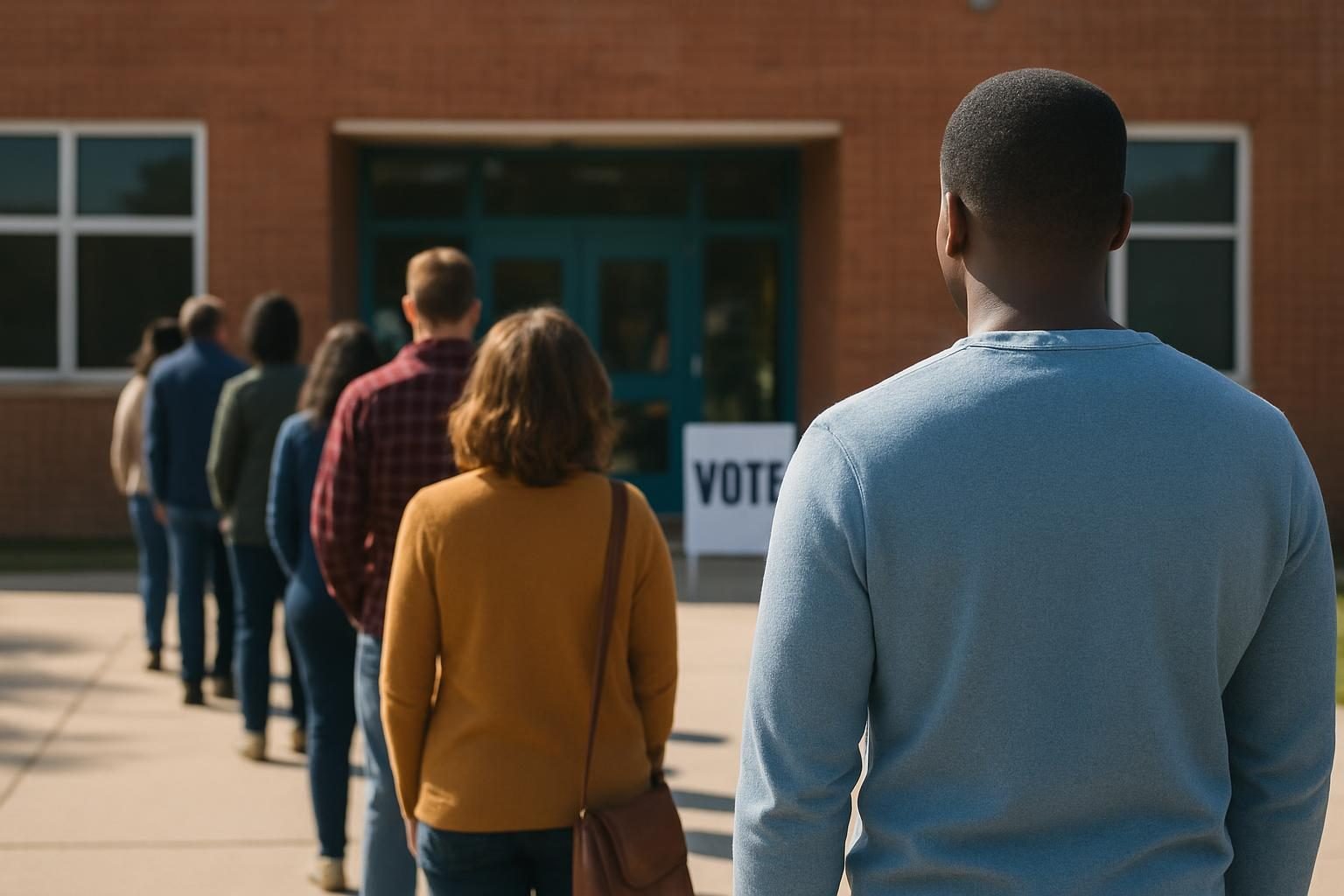
In most American elections, the candidate with the most votes wins the seat, and everyone else gets nothing. Political scientists note that such rules tend to produce two dominant parties, an idea explained in our piece on why we have a two-party system. When only two teams matter, politics becomes us versus them by design, and a vote for a third option can feel wasted.
Primaries and safe seats
Many districts lean so strongly toward one party that the real contest is the primary, the election inside the party. Primary elections usually have low turnout, and the voters who show up tend to be the most committed. A candidate who fears a challenge from within the party has a reason to appeal to the base, not the middle.
Drawing the lines
District boundaries matter too. When those who hold power draw the maps, it can make more seats safe for one party and reduce the pressure to compromise. We cover this in what gerrymandering is and how district lines pick voters. Both parties have used it when they could.
Ideas for reform, and their trade-offs
Some reformers propose changes such as ranked-choice voting, open primaries or independent redistricting commissions. Supporters argue these would reward broader appeal. Critics worry about complexity or unintended effects. The evidence is still developing, and reasonable people weigh the trade-offs differently.
When rules reward the loudest voters, candidates learn to speak to the loudest voters.
Money in Politics: Another Source of Pressure
Campaigns cost money, and fundraising pressure shapes what politicians say. Emotional, fear-based appeals tend to raise money efficiently, particularly from small donors who are responding to an urgent message. Large donors and organized interests, meanwhile, can shape which issues get attention and which do not.
If you want the mechanics, our guides on how political campaigns are funded, how lobbying works and the Citizens United decision lay out the rules and the arguments on each side. Supporters of fewer limits emphasize free speech; supporters of more limits emphasize corruption and unequal influence. Both are values-based positions about how to balance competing goods. Questions about undisclosed spending, often called dark money, raise similar debates about transparency versus privacy.
For a wider view of who holds influence and why, see who has power in America.

Why It Feels So Personal: Identity and Sorting
There is a human side to this too. Many researchers describe a process called “sorting”: over time, political affiliation has lined up with other parts of identity, including religion, geography, education and the places people live. When party membership overlaps with many parts of who you are, an attack on your party can feel like an attack on you.
People also have a deep need to belong. Psychologists have long found that groups, even arbitrary ones, quickly develop loyalty to insiders and suspicion of outsiders. Politics offers a ready-made team, with its own language, heroes and enemies.
Add to that the shrinking number of places where people of different views mix. Fewer people attend the same civic groups or live in politically mixed neighborhoods, and so we meet the other side mostly through media portrayals, which are usually the least charitable version.
Facts, Interpretations and Values
A good habit for any political argument is to separate three things:
- Facts: things that can be checked, such as how a district is drawn or how many people voted.
- Interpretations: explanations of why something happened, such as how much social media drives polarization. These deserve humility.
- Values: questions about what matters most, such as how to balance liberty and equality. No dataset settles these.
Much polarization comes from treating values disagreements as if the other side were simply uninformed or dishonest. Often both sides have the facts roughly right and weigh competing goods differently.
What Can We Do About It?
Nobody can fix a system alone, but individuals are not powerless. Here are a few practical moves:
- Follow the incentives. When something makes you furious, ask who gains from your reaction.
- Diversify your information. Read or watch a source you disagree with, not to be convinced but to understand how its audience sees the world.
- Go local. City halls and school boards deal with potholes, budgets and classrooms, and national labels fit poorly there. See what a city council does, then consider other ways to show up beyond voting.
- Talk, carefully. Conversations across the divide are possible. Our practical guide to talking about politics with family offers specific techniques.
- Read widely. Our reading list by theme is a starting point for seeing the country through different eyes.
Think about it: Think of someone you know who votes differently than you do. What do you think they fear, and what do they hope for? Now imagine they were asked the same question about you. How closely would your answers match?
For more on the broader systems at work, our category on power and incentives collects related explainers.
A Reason for Hope
The honest news is that polarization is real, and many of its drivers are built into how we run elections, media and fundraising. The hopeful news is that structures made by people can be changed by people, and that the country is less divided than its loudest corners suggest. Most Americans spend their days with neighbors, coworkers and families who disagree with them, and get along.
Understanding the incentives will not end the divide. But it can change how you read the next outrage, and that is a start.
Key takeaways
- Polarization means moving toward opposite poles; the most troubling form is emotional distrust of the other side, not policy disagreement itself.
- Evidence shows the parties have moved apart and mutual hostility has risen, though the public is often less extreme than loud voices suggest.
- Many drivers are incentives, not villains: media, platforms, campaigns and rules each reward conflict in their own way.
- Election rules such as winner-take-all voting, low-turnout primaries and district lines can push candidates toward the base.
- Separating facts, interpretations and values makes disagreements clearer and less personal.
- Local engagement, varied information and honest conversation are practical ways to push back.
Frequently asked questions
What is polarization in simple terms?
Polarization is the process by which people and groups move toward opposite ends of a political spectrum, with fewer people in the middle and more distrust between the sides. Researchers distinguish between disagreement over policies and “affective” polarization, which is dislike and distrust of the other side as people.
Is America more polarized than it used to be?
Most researchers say yes, in important ways. Measures of congressional voting show the parties have grown further apart since the 1970s, and surveys show rising negative feelings toward the opposing party. But the public is often less extreme on specific issues than its loudest voices suggest, and America has been deeply divided before, most obviously before the Civil War.
Does social media cause polarization?
Social media is likely one amplifier, not the sole cause. Polarization rose in America before social platforms existed, and some older Americans who use the internet least have polarized as much as anyone. Still, platforms that profit from attention can reward outrage and make extreme voices look more common than they are. Researchers are still debating how large the effect is.
Is polarization always bad?
Not necessarily. Disagreement is normal and healthy in a free society, and sharp debates have driven reforms in American history. The concern is when disagreement hardens into contempt, when compromise becomes a betrayal, and when people can no longer agree on basic facts or treat opponents as fellow citizens.
What can ordinary people do about polarization?
Several things help: diversify your information sources, notice who profits when you are angry, talk with people you disagree with, and get involved locally, where problems are practical and relationships are real. None of this requires changing your views, only staying curious about why others hold theirs.