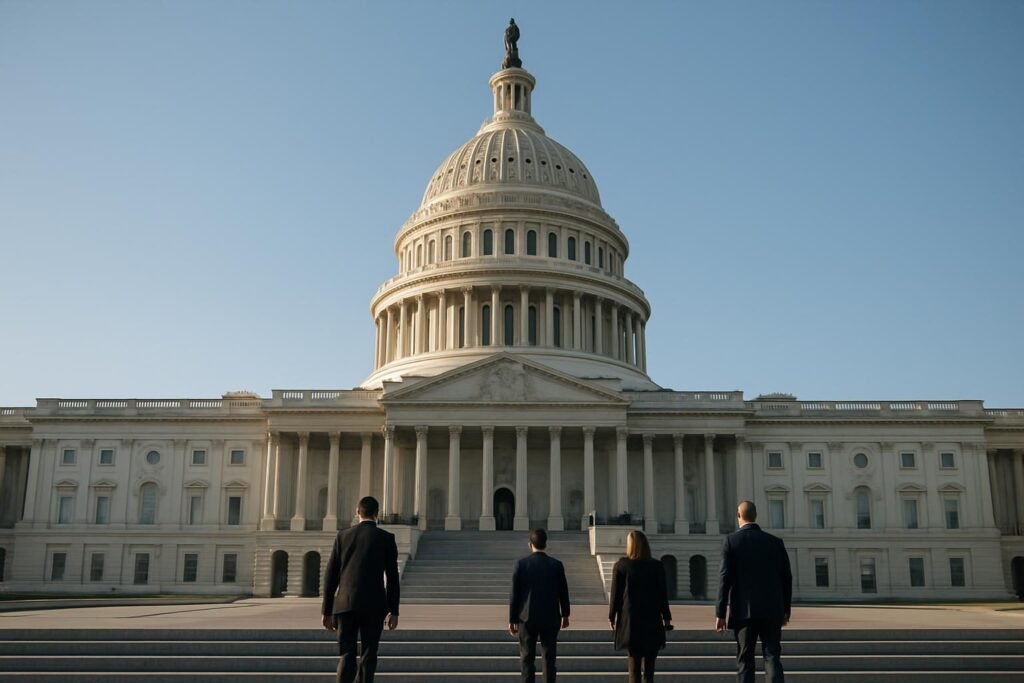
Every year, thousands of people walk the halls of Congress and state capitols with a single goal: to be heard by the people who write the rules. Some are paid professionals, some are volunteers, and some are just neighbors with a story to tell.
So how does lobbying work, and why is it legal when it sometimes looks so much like buying influence? The honest answer is that it is both a constitutional right and a system with real incentives worth understanding—incentives shaped partly by our two-party system.
Quick answer: Lobbying is the act of trying to influence government decisions, usually by giving lawmakers and agency officials information, arguments, and political support. It is legal because the First Amendment protects the right to petition the government. The law does not ban it; it regulates it through registration, disclosure, and limits on gifts, and it treats outright bribery as a crime.
What lobbying actually is
At its core, lobbying means communicating with government officials to shape a decision. That decision might be a bill in Congress, a rule written by a federal agency, a contract, a zoning change, or a state budget line.
The word comes from the lobbies of legislative buildings, where people waited to speak with lawmakers. Today the work happens in offices, hearing rooms, emails, phone calls, and sometimes over dinner.
Lobbying is not limited to corporations. Teachers’ unions, hospital associations, environmental groups, gun owners’ organizations, veterans’ groups, churches, universities, and cities all lobby. If an organization has an interest in a government decision, it probably has someone trying to influence it.
Who does the lobbying
- Contract lobbyists: professionals at firms who are hired by clients, from companies to nonprofits.
- In-house lobbyists: employees whose job is to represent one organization’s interests in government.
- Trade associations: groups that represent an entire industry, such as farmers, builders, or retailers.
- Advocacy groups and unions: organizations that represent members or causes.
- Citizens: anyone who contacts an official about an issue they care about.
Why lobbying is legal: the First Amendment
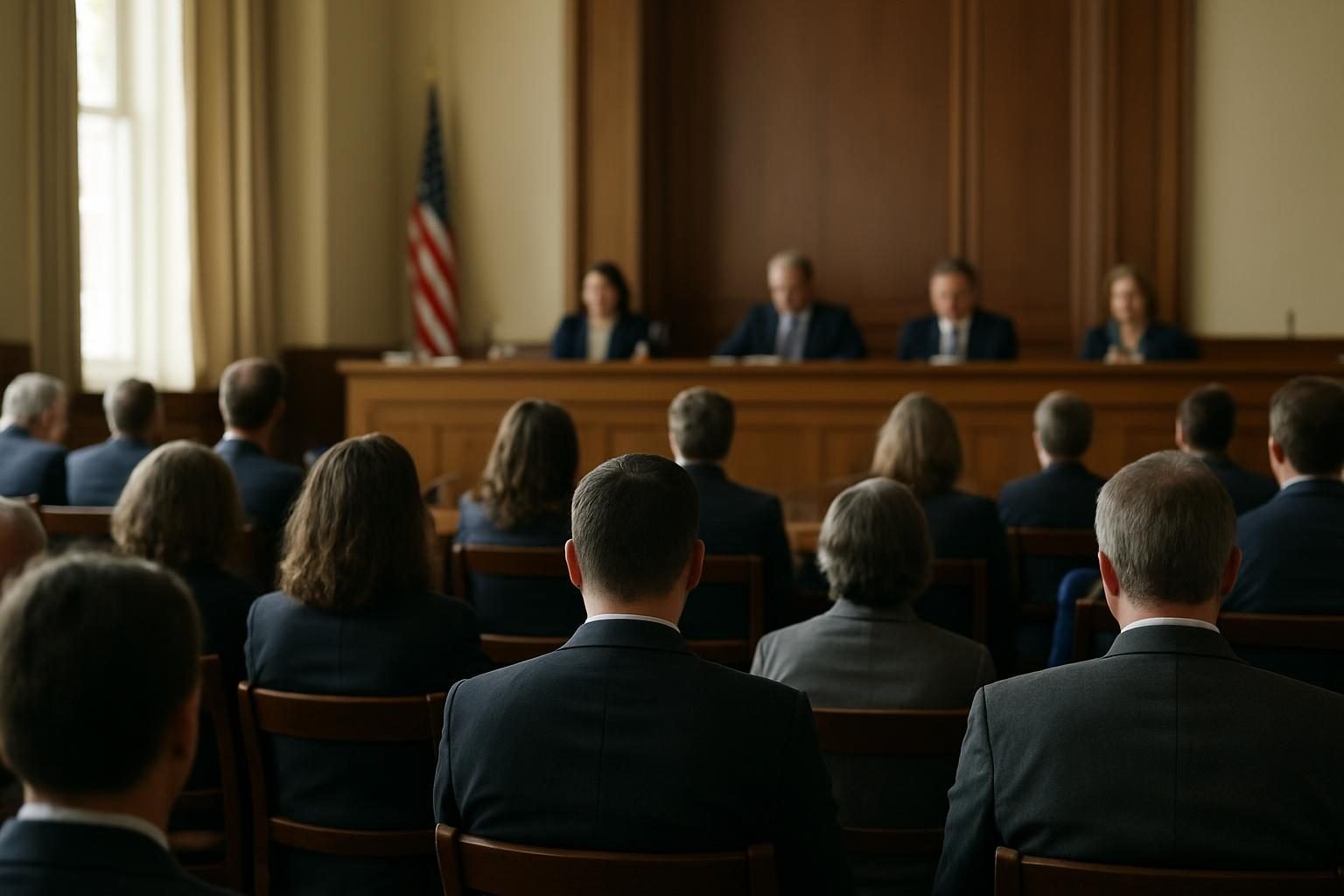
The First Amendment says Congress shall make no law abridging the right of the people “to petition the Government for a redress of grievances.” Lobbying is, in constitutional terms, a form of petitioning. You can read more about the freedoms involved in our guide to the Bill of Rights in plain language.
The idea behind the clause is simple. A government that answers to the people has to let the people tell it what they need. Banning that contact would mean banning citizens from asking their own representatives for anything.
The challenge is that the right belongs to everyone, but time, money, and expertise are not evenly spread. That tension sits underneath nearly every argument about lobbying.
How lobbying works in practice
Modern lobbying is less about dramatic favors and more about steady, unglamorous work. Most of it looks like a very persistent form of education.
Information and expertise
Lawmakers must vote on everything from farm policy to cybersecurity, and they have small staffs. Lobbyists often supply research, data, draft language, and explanations of how a proposal would affect real businesses or communities.
That information can be genuinely useful. It can also be selective, because lobbyists are paid to make one side’s case. Good staffers learn to ask who is speaking and what they stand to gain.
Relationships and access
Lobbying is built on trust over time. Many lobbyists are former legislative aides or agency officials who know how the process works and whom to call. This movement from government to advocacy is often called the “revolving door,” and critics and defenders read it very differently, as we describe below.
Grassroots pressure
Some lobbying aims to generate calls, letters, and visits from ordinary constituents. Officials often pay close attention to this, because voters are the ones who ultimately decide their jobs.
Political support
Organizations can also support candidates through legal channels such as political action committees. Lobbying and campaign giving are legally separate, but in practice they often overlap in how they are perceived. For more on how that money flows, see our planned explainer on how political campaigns are funded.
Lobbying the agencies, not just Congress
Many people picture lobbying as a Capitol Hill activity, but a great deal happens at federal agencies, where detailed rules are written after a law passes. Public comment periods let anyone weigh in, though organizations with staff and lawyers tend to use them most. This is one reason the concept of regulatory capture comes up so often in debates over lobbying.
The right to ask your government for something belongs to everyone. The ability to ask loudly and often does not.
What the law actually regulates
Lobbying is legal, but it is not a free-for-all. Federal law, chiefly the Lobbying Disclosure Act of 1995 and later reforms, sets some basic rules. Details change, so check current official sources such as the Senate and House lobbying disclosure sites.
- Registration: people and firms who meet certain thresholds of lobbying activity must register.
- Disclosure: registered lobbyists file regular reports on who they work for, what issues they address, and roughly how much is spent.
- Gift rules: Congress restricts what lobbyists may give members and staff, such as meals and travel.
- Bribery laws: trading something of value for an official act is a crime, regardless of how it is labeled.
- Foreign agent rules: separate laws require disclosure when people lobby on behalf of foreign governments or interests.
Many states and cities have their own lobbying rules, which vary widely. A town may have almost none, while a large state may require detailed reporting.
Lobbying versus bribery
The legal line is a corrupt exchange: a thing of value given in return for an official act. Making a persuasive case, offering information, or supporting a lawmaker’s campaign through legal channels is not, by itself, bribery.
That distinction is clear on paper and murkier in real life, which is why disagreements persist about whether the system as designed lets influence in through the side door.

The case for lobbying
Defenders raise several points, and they are worth taking seriously.
- It is representation. Groups of every kind, from nurses to nonprofits, use lobbying to be heard. Without it, officials would hear mainly from whoever is already in the room.
- It supplies expertise. Understaffed legislatures benefit from people who know the details of an industry or a problem.
- It protects a basic right. Restricting who can speak to the government raises serious constitutional concerns.
- It is not one-sided. Opposing interests, such as consumers and producers or labor and management, often lobby against each other, which can surface tradeoffs.
The case for concern
Critics, who come from the left, the right, and the middle, raise their own points.
- Unequal access. Well-funded interests can hire full-time advocates, while diffuse groups, like ordinary taxpayers, struggle to organize.
- Concentrated benefits, spread-out costs. A narrow group may gain a lot from a rule while the cost is shared quietly among millions, so only one side has a strong reason to fight.
- The revolving door. The prospect of a lucrative lobbying job after government service may subtly shape decisions, or at least how the public perceives them.
- Complexity favors insiders. Rules written in technical language can be shaped most easily by those who understand them best.
Notice that both lists are true in different cases. A lobbying campaign can help a rural clinic win funding and also help a large firm shape a rule in its favor. The same tool serves very different ends.
Follow the incentives
Understanding lobbying gets easier when you look at what each player wants rather than assuming bad intentions. A simple map helps, and our planned guide on following the incentives in politics goes deeper.
| Player | What they want | What they offer |
|---|---|---|
| Lobbyists and their clients | Favorable laws and rules, or protection from unfavorable ones | Information, expertise, political support, constituent pressure |
| Lawmakers | Re-election, policy goals, and workable legislation | Votes, attention, committee influence |
| Staffers and agency officials | Accurate information and manageable workloads | Access to the drafting process |
| Voters | Policies that reflect their needs and values | Votes, calls, local organizing |
Seen this way, lobbying is less a plot than a market for attention and information inside government. Markets can work well and can be distorted, depending on who has a seat at the table. For the bigger picture, see our guide to who has power in America.
Lobbying is not a secret handshake. It is a competition for the limited attention of busy decision-makers.

Where lobbying meets campaign money
Lobbying and campaign finance are different things governed by different laws, but they influence each other. Campaign donations can open doors, and the public often suspects a link between giving and policy outcomes. Researchers have studied this question for decades, and findings are mixed and depend heavily on the issue and the method.
The Supreme Court’s decisions on political spending, including the one covered in our planned piece on Citizens United, also shaped how money moves around elections. Some spending is disclosed and some is not; see our planned explainer on dark money for that debate. For how courts handle such questions generally, read what the Supreme Court does.
Lobbying is not only a Washington story
State legislatures, city councils, and school boards are lobbied too, often with fewer eyes watching. A developer asking for a zoning change, a union negotiating a contract, or parents pressing a school board are all engaged in some form of lobbying. See how local bodies work in our guides to what a city council does and what a school board does.
Because local meetings draw small crowds, a few engaged people can have outsized influence. That cuts both ways: well-organized insiders can dominate, but so can a handful of determined neighbors.
How ordinary people can use the same tools
You do not need a registered lobbyist to be heard. These steps are legal, free, and often more effective than people expect.
- Be specific. Name the bill or decision and say what you want. Our guide to how a bill becomes a law helps you find the right moment to speak up.
- Tell your story. Staffers often remember a personal, concrete account more than a form letter.
- Contact the right level. Local, state, and federal officials handle different issues; federalism explains who does what.
- Join with others. A group of constituents is harder to ignore than one voice.
- Show up repeatedly. Consistency builds credibility. Our list of ways to show up beyond voting offers more ideas.
Think about it: Imagine a proposal that would help a small group a great deal while costing everyone else a few dollars each. Who would be most motivated to lobby for it, who against it, and what would it take for the quieter side to be heard?
Key takeaways
- Lobbying is the effort to influence government decisions, and it is protected by the First Amendment’s right to petition.
- It is regulated, not banned: registration, disclosure, gift limits, and bribery laws apply.
- Lobbyists include corporations, unions, nonprofits, cities, and ordinary citizens, not just big business.
- Supporters see representation and expertise; critics see unequal access and a revolving door. Both describe real cases.
- Understanding who wants what, and who has time and resources, explains much of how lobbying shapes outcomes.
- Anyone can lobby by contacting officials, joining others, and showing up consistently.
Frequently asked questions
Is lobbying legal in the United States?
Yes. The First Amendment protects the right to petition the government for a redress of grievances, and lobbying is a form of petitioning. What the law does is regulate it: lobbyists must register and file disclosures, and there are limits on gifts and on bribery, which is a crime.
What is the difference between lobbying and bribery?
Bribery is trading something of value for an official act, and it is a federal crime. Lobbying is attempting to influence government decisions through information, arguments, relationships, and legal political support. The line can be debated at the edges, but the legal difference is whether there is a corrupt exchange.
Who are lobbyists?
They include professional advocates who work for firms, in-house employees at companies and trade groups, and staff at nonprofits, unions, universities, and advocacy organizations. Many are former government staffers. Some people lobby only occasionally, such as a hospital administrator visiting a state capitol.
How much is spent on lobbying in the United States?
Federal lobbying spending reported under disclosure law is commonly cited at roughly four billion dollars a year in recent years, though the exact figure varies and some activity is not captured by the rules. Check OpenSecrets or the official Senate and House lobbying disclosure databases for current numbers.
Can ordinary citizens lobby?
Absolutely. Calling or writing your representative, testifying at a city council or state hearing, and meeting with legislative staff are all forms of citizen lobbying. Professional lobbyists usually have more time and resources, but elected officials do respond to constituents, especially when many people speak up.
Want to see how lobbying fits into the larger machinery of influence? Explore the rest of our Power & Incentives coverage, and start with our guide to how the US government works.