
Most Americans know the big November election. Far fewer show up for the quieter votes that decide who gets onto the ballot in the first place. That earlier round, the primary, often shapes the real choices voters face.
Quick answer: What are primary elections? They are votes held before the general election in which voters choose which candidates will represent each political party on the final ballot. Rules differ by state: some primaries are closed to party members, some are open to everyone, and a few use other systems. Turnout is usually much lower than in November, which gives the people who do vote outsized influence.
What are primary elections, and why do they exist?
A primary election is a preliminary contest. Its job is to narrow a crowded field of candidates down to one nominee per party (or, in some systems, to a smaller group of finalists) before the general election.
Think of it like tryouts before a season starts. The general election is the championship game, and the primary decides who gets on the field.
Primaries are used for many offices: president, U.S. Senate and House seats, governor, state legislatures, and many local positions. Some places also hold primaries for judges, sheriffs or city offices and local taxes, though practices vary widely.
A brief history
For much of the 1800s, parties picked their nominees through conventions and party leaders, often in meetings voters never saw. Around the early 1900s, reformers in the Progressive Era pushed for primaries as a way to give ordinary voters a say and weaken the grip of party bosses. Over the twentieth century, primaries spread across the states and became the main way many nominees are chosen.
For a broader look at how these eras fit together, see our guide to American history that explains today.
Why states run primaries differently
There is no single national primary system. Under the U.S. Constitution, states have wide authority over how elections are run, so each state, and sometimes each party within a state, sets its own rules. This is federalism at work, and our explainer on how state and federal power work covers the underlying idea.
The result is a patchwork. Two neighbors in different states may face completely different rules about who can vote, when, and how.
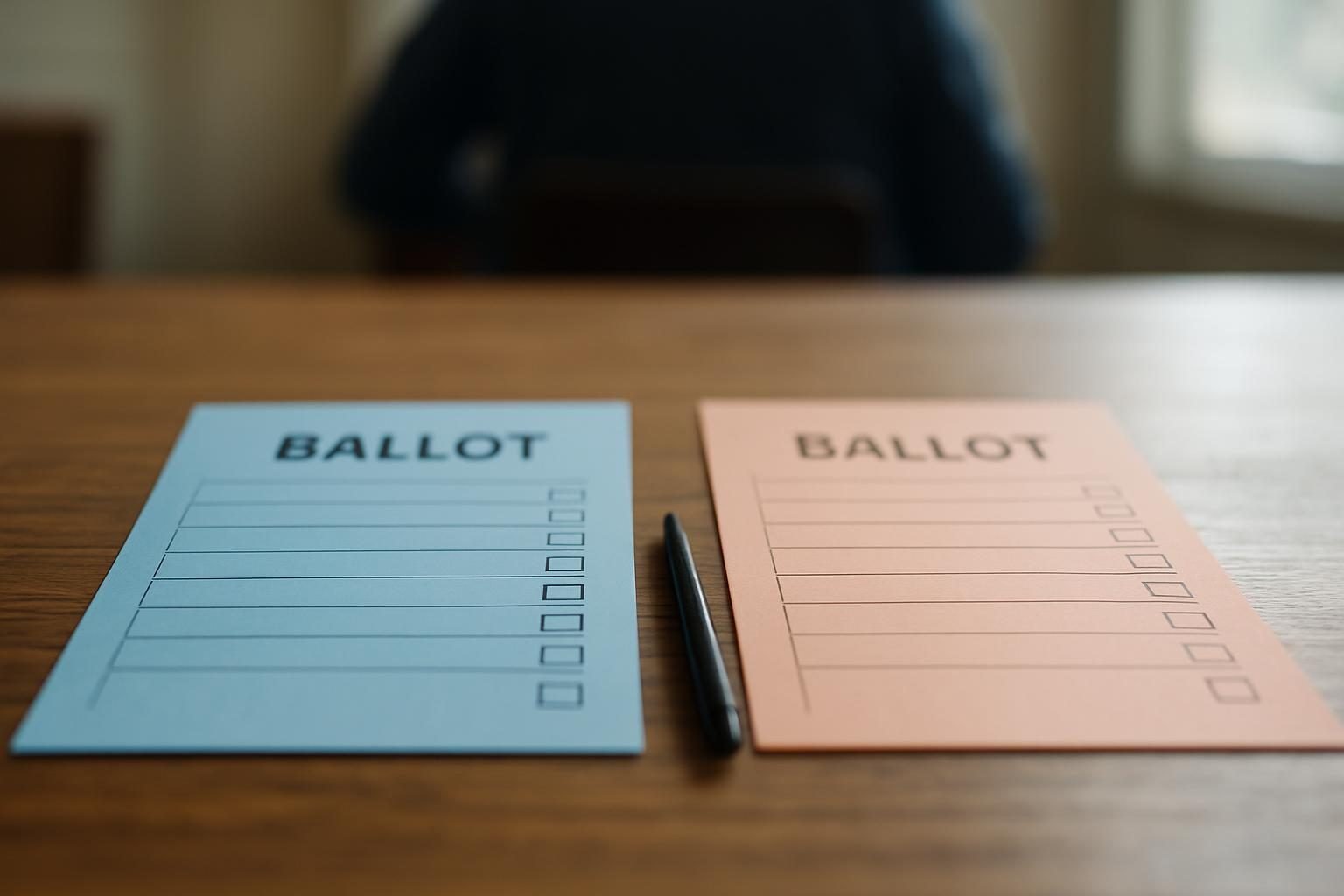
Open, closed and other types of primaries
The main differences come down to one question: who is allowed to vote in which party’s contest? Here is a plain-language overview of the common types.
| Type | Who can vote | How it generally works |
|---|---|---|
| Closed primary | Usually only voters registered with that party | You must be registered with a party in advance to vote in its primary. |
| Semi-closed primary | Party members, plus often unaffiliated voters | Independents may choose a party’s ballot, but voters registered with another party generally may not. |
| Open primary | Any registered voter | You pick one party’s ballot in the booth, regardless of your registration. |
| Top-two (or similar) primary | Any registered voter | All candidates share one ballot; the top vote-getters advance to November, whatever their party. |
| Ranked-choice primary | Varies | Voters rank candidates in order, and votes are tallied in rounds until someone has a majority. |
These categories are simplifications. States mix and modify them, and the details change over time. Always check your state or local election office for the current rules before you vote.
Caucuses: a close cousin
Some states or parties use caucuses instead of, or alongside, primaries. A caucus is a meeting where participants gather, discuss, and show support for candidates in person rather than casting a private ballot. Caucuses can take longer and require more time commitment, which affects who participates. Many states have moved away from them in recent years.
The case for and against each system
Each design reflects a different view of what primaries are for. It helps to separate the facts (how the rules work) from the values (what we want elections to do).
The case for closed primaries
Supporters argue that a party is a voluntary association, and its members should choose its nominee. Closed primaries, they say, prevent “raiding,” where voters from the other party strategically vote for a weaker candidate. They also keep nominees accountable to the party’s own supporters.
The case for open primaries
Supporters argue that taxpayers help fund elections, so every voter should have a say in who makes the ballot. Open primaries can also include independents, a growing group of voters who do not register with a party. Proponents suggest this may reward candidates with broader appeal.
The case for top-two and ranked-choice systems
Advocates say these systems give voters more choices and reduce the pressure to vote strategically. Critics worry that top-two can leave voters with two candidates from the same party in November, and that ranked-choice ballots can be confusing or slower to count. Evidence on how much these systems change outcomes is still being studied, and results vary by place.
Every primary system answers the same question differently: whose voice should count when a party picks its nominee?
Why turnout is so low
Turnout in primaries is usually far lower than in general elections. Exact numbers vary by state, office and year, but commonly cited estimates put participation in many primaries at roughly a fraction of November levels, often somewhere around 20 to 30 percent of eligible voters, and sometimes lower. Treat that as an approximate range, not a precise figure.
Why so few? Several reasons tend to come up in research and reporting:
- Low visibility. Primaries get less news coverage and advertising than November races, so many people do not know one is happening.
- Confusing rules. If you are unsure whether you can vote, which ballot you can take, or when registration closes, staying home is the easy choice.
- Odd timing. Primaries can fall in spring or summer, on dates that shift between states and years, and many people lose track.
- Perceived stakes. In a district that reliably leans one way, the primary may effectively decide the winner. But many voters do not realize this, and others feel their vote will not matter.
- Few meaningful contests. When an incumbent faces little opposition, there may be nothing exciting on the ballot.
None of this means voters are lazy. It means the system asks a lot of people while offering them little attention, information, or convenience. That is a design problem as much as a motivation problem.
Does low turnout make politics more extreme?
This is one of the most debated questions about primaries, and it deserves a careful answer.
The argument that it does
When few people vote, the electorate tends to be more committed, more partisan, and more engaged than the general public. Candidates, the argument goes, may respond by taking firmer positions to win over those voters, which can leave moderate voters feeling unrepresented in November.
The argument that it is more complicated
Others note that researchers have found mixed results. Primary voters are not always as different from general-election voters as people assume. Other forces, such as how district lines are drawn, the role of money, and media incentives, also push politics in various directions. Our explainer on gerrymandering and how district lines pick voters shows how safe seats make primaries more decisive, and our piece on who has power in America looks at the incentives involved.
Where the evidence points
It is reasonable to say that primaries can magnify the influence of a small, highly engaged group of voters. Whether that group is dramatically more extreme than everyone else, and how much it changes candidate behavior, is less settled. Be wary of anyone who treats the question as closed in either direction.
When few people vote, each ballot carries more weight, and that is both the problem and the opportunity.
Presidential primaries versus local ones
Presidential primaries get the spotlight, but they work differently from many other contests. In presidential races, voters generally choose delegates who later help pick the party’s nominee at a national convention. The parties set many of these rules themselves, which is why the process can look different between parties and across election cycles. For how this connects to the final result, see our guide to how the Electoral College works.
Meanwhile, primaries for city councils, school boards, state legislatures and county offices can have a big effect on daily life, often with very few voters. A single vote can matter more in a small contest. If you want to understand what those offices do, start with what a city council does and how local governments shape your daily life.
How to prepare for a primary
You do not need to be an expert. A few simple steps go a long way:
- Check your registration. Confirm your registration status and party affiliation (if your state uses one) with your state or local election office.
- Learn the rules. Find out whether your state’s primary is open, closed, or something else, and when the deadlines fall.
- Know the date and your options. Look up the primary date, early voting, and mail ballot rules from official sources.
- Research the candidates. Read a mix of sources and notice who is funding the coverage and ads. Our media literacy guide can help you sort signal from noise.
- Talk it through. Discuss what you find with people you trust, including those who see things differently.
Election rules change from year to year, so rely on your state’s official election website rather than memory or hearsay.
Think about it: If you had to design a primary system from scratch, who would you let vote, and why? What trade-offs would you accept to get more people to participate?

Why this matters for how democracy works
Primaries sit at the intersection of several big questions: What is a party, and who does it belong to? How much should voters, rather than insiders, shape the choices on the ballot? And how do we balance participation, choice and stability?
These questions connect to the deeper design of the American system. If you are curious about the foundations, our pieces on republic versus democracy and how the U.S. government works are good next steps. Ballot access is also tied to civic engagement beyond Election Day, and to how direct voting tools such as a ballot initiative work in states that allow them.
It also helps to remember that the Constitution says very little about parties or primaries. To see what it does cover, explore what the Constitution actually says. And once the winners take office, the next challenge is how Congress works in practice.
For talking about all of this without blowing up a family dinner, try our practical guide on how to talk about politics with family. You can also browse more articles in the Civic Foundations category.
Key takeaways
- A primary is an election held before the general election to choose each party’s nominee, or in some systems, the finalists.
- States set their own rules, so primaries may be open, closed, top-two, or ranked-choice depending on where you live.
- Turnout is typically much lower than in November, often in the range of 20 to 30 percent of eligible voters (approximate), which gives participating voters more weight.
- Whether low turnout makes politics more extreme is debated, and the evidence is mixed.
- Rules change, so check your state or local election office for current registration deadlines, ballot types, and dates.
- Local primaries can decide offices that affect daily life, often with very few votes.
Frequently asked questions
What are primary elections in simple terms?
A primary election is a vote held before the general election to decide which candidates will represent each party on the November ballot. Voters, rather than party leaders alone, narrow the field. Rules vary by state, so who can vote and how the results are counted depends on where you live.
What is the difference between an open and a closed primary?
In a closed primary, generally only voters registered with a party can vote in that party’s contest. In an open primary, voters can usually choose which party’s ballot to take, regardless of their registration. Many states use variations in between, so check your state’s rules with your election office.
Why is turnout so low in primary elections?
Primaries are often held at times people are not expecting, receive less media attention, and sometimes feel less consequential than November races. Voters may also be unsure whether they are eligible or which ballot they can use. Turnout is typically well below general election turnout, though exact figures vary by year and state.
Do primaries make politics more extreme?
This is debated. One argument holds that low-turnout primaries are dominated by the most committed voters, who may reward candidates with firmer positions. Others point out that evidence is mixed and that many other factors, such as district lines and media, also shape politics. Researchers continue to study the question.
What is a top-two or ranked-choice primary?
In a top-two system, all candidates appear on one ballot and the two highest vote-getters advance to the general election, regardless of party. Ranked-choice systems let voters rank candidates in order of preference. Only some states and localities use these methods, and the rules change, so check current official sources.