
Most of us learned that being a good citizen means voting. But voting happens a few times a year at most, while the decisions that shape your street, your schools, and your taxes happen almost every week.
So what is civic engagement, and how do ordinary people take part without making it a second job? Let’s walk through it.
Quick answer: Civic engagement means taking part in the life of your community or country to help solve shared problems or influence shared decisions. Voting is one form. Others include attending public meetings, volunteering, joining local boards, contacting officials, organizing neighbors, and staying informed. It can be political or nonpolitical, and it works at any scale, from your block to Washington.
What Is Civic Engagement, Really?
At its simplest, civic engagement is the set of things people do together, or on behalf of each other, that connect them to public life. The word “civic” comes from the Latin for citizen, but you do not need to be a citizen, or even a voter, to take part in many of these activities. Residents, parents, workers, and neighbors all have a stake in how their communities run.
Researchers often sort engagement into a few broad families. These are not rigid categories, and they overlap, but they help show how wide the field is.
- Electoral: voting, working on campaigns, serving as a poll worker, running for office.
- Political but not electoral: contacting officials, testifying at hearings, signing petitions, peaceful protest.
- Community and service: volunteering, mutual aid, neighborhood groups, faith or school organizations.
- Informational: reading local news, learning how institutions work, discussing issues with people who disagree.
Notice that most of these do not require a party label. A person who organizes a neighborhood cleanup and a person who testifies about a zoning change are both engaged, even if their politics differ sharply.
Voting chooses decision-makers. Engagement is how you shape what they decide between elections.

Why Voting Alone Is Not the Whole Picture
Voting is foundational. It is the main way a large republic confers legitimacy on its leaders, and it is worth understanding how it works. If you want the structural background, our guides on republic vs. democracy and how the US government works are good places to start.
But elections are blunt instruments. A ballot asks you to pick among a handful of options on a handful of questions. It cannot tell an official that the bus route is broken, that a permit process is confusing, or that a proposed budget cuts something residents value.
Where decisions actually get made
Much of the daily business of government happens at the state and local level, in the structure known as federalism. Zoning, policing policies, school curricula, road repair, and local tax rates are mostly decided close to home. We explore this in how local governments quietly shape your daily life.
Local meetings often draw small crowds, which means the people who show up can carry real weight. That is not a flaw in any one person; it is an incentive structure. Officials respond to the voices they hear, and they hear most from those who are present.
15 Ways to Show Up Beyond Voting
Here are fifteen options, grouped by how much time they usually take. None is required, and none is “the right one.” Pick what fits your life.
Low time commitment (minutes to an hour)
- Read a nonpartisan ballot guide. Many states and local election offices publish official voter information. Learning what is on your ballot, including the unglamorous local races, is engagement.
- Check your registration and your polling place. Rules vary by state, so confirm details with your state or local election office.
- Contact an elected official. A short, specific message about one issue is often more useful than a long general one. Staff typically track the topics residents raise.
- Read local news. Knowing what your council or school board is considering is the first step to everything else. Our media literacy guide can help you judge sources.
- Take part in the census and public surveys. Official counts and community surveys inform how resources and representation are allocated.
Moderate commitment (a few hours a month)
- Attend a public meeting. City councils, county boards, and planning commissions are generally open to the public. See our plain-English guides to what a city council does and what a school board does.
- Speak during public comment. Most local bodies set aside time for residents. Check the agenda and sign-up rules, which vary by place.
- Learn how your local budget works. Understanding how local taxes are decided turns abstract frustration into specific questions.
- Volunteer with a local organization. Food banks, tutoring programs, libraries, and youth groups meet real needs and build relationships across differences.
- Join or start a neighborhood group. Block associations, parent groups, and mutual aid networks create the trust that makes other efforts possible.
Higher commitment (ongoing roles)
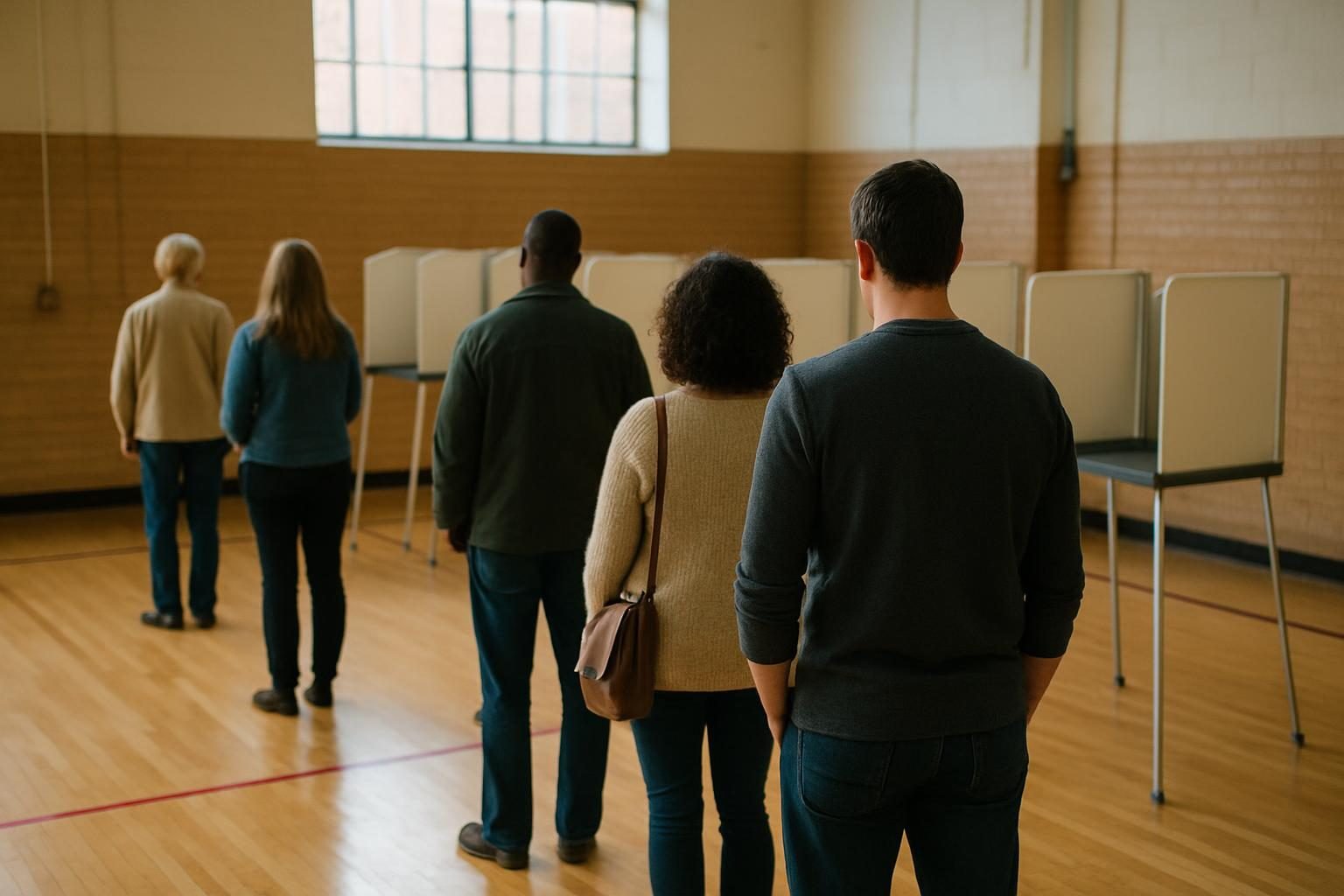
- Serve as a poll worker. Election offices rely on residents to staff polling places. Requirements and pay vary, so ask your local election office.
- Join a citizen board or commission. Many towns have volunteer panels for parks, planning, libraries, or housing, and they often struggle to fill seats.
- Participate in primaries and party processes. Turnout is often low, which magnifies each participant’s influence. See primary elections explained.
- Run for local office. It is more approachable than many assume. Our beginner’s roadmap walks through the basics.
- Help organize around an issue. This might mean gathering signatures, hosting a community forum, or working on a ballot measure, a topic we cover in ballot initiatives and referendums.
Local government often has the smallest audience and the biggest effect on daily life.

The Strongest Arguments About What Engagement Should Look Like
Americans disagree, sometimes sharply, about what counts as good civic participation. It helps to state each view in its best form.
The case for institutional channels
One view holds that engagement works best through established processes: voting, public comment, petitions, and lawful organizing. Supporters argue these channels are open to everyone, create a record, and carry democratic legitimacy. They point out that institutions can be reformed from within, and that stable rules protect minorities and majorities alike.
The case for direct and disruptive action
Another view holds that formal channels can be slow, captured by well-organized interests, or closed to groups with little power, so sustained public pressure through marches, boycotts, and civil disobedience is sometimes necessary. Advocates point to American history, where movements for labor rights, women’s suffrage, and civil rights used protest alongside legal and legislative strategies. Our overview of American history that explains today gives some of that context.
Where the evidence points
Historians and political scientists generally find that the two are not rivals in practice. Movements that changed policy have typically combined pressure from outside institutions with work inside them, such as lawsuits, lobbying, and elections. Which tactics are appropriate in a given case is a values question, not just a factual one, and reasonable people weigh it differently.
Facts, Interpretations, and Values
When people argue about participation, it helps to separate three kinds of claims.
| Type | Example | How to check it |
|---|---|---|
| Fact | Local elections often have lower turnout than presidential elections. | Look at official election results from your area. |
| Interpretation | Low turnout means local officials hear mostly from a narrow slice of residents. | Weigh evidence; reasonable people may differ on how strong the effect is. |
| Value | Everyone has a duty to participate, or participation should be purely voluntary. | No data settles it; it depends on what you prioritize. |
Keeping these apart makes conversations calmer. You can agree on the facts and still differ on what to do, and that is a normal feature of a free society. For help with those conversations, see how to talk about politics with family.
Who Gets Heard, and Why It Matters
Engagement is not evenly distributed. Surveys and research generally find that people with more free time, income, and education tend to participate more, and that organized groups with resources can make their views heard more consistently than scattered individuals. This is not a conspiracy; it is an incentive pattern. Officials face limited time and respond to the information that reaches them most reliably.
That is one reason broad participation matters. It is also why barriers like inconvenient meeting times, confusing processes, or limited language access deserve attention. For a wider look at how influence flows, see who has power in America.
Understanding how the system works is itself a form of power. If you want to build that foundation, our pieces on what civic literacy is and what it looks like in everyday life are good companions. You might also explore what the Constitution actually says and how Congress works for the national picture.
How to Start Without Burning Out
A few practical principles help engagement last.
- Start local and specific. Choose one place, one issue, or one body. Depth beats breadth.
- Learn before you speak. Read the agenda, the budget, or the proposal. Informed, specific comments tend to be heard.
- Show up more than once. Relationships with staff and neighbors build over time.
- Talk to people who disagree. You will learn what the best version of the other side sounds like, and you may find common ground on local problems.
- Know your limits. Sustained engagement beats a brief burst followed by exhaustion.
Rules about meetings, comment periods, petitions, and elections differ by state and locality and change over time. Check your local government’s official website or election office for current details. Nothing here is legal advice.
Think about it: Which decision made in your town or county in the past year affected your daily life most? Do you know which body made it, when it met, and whether residents were invited to speak? What would it take for you, or someone you know, to attend one meeting this year?
Key takeaways
- Civic engagement is any way people take part in public life, from voting to volunteering to serving on a board.
- Voting is essential but infrequent; many daily-life decisions are made locally between elections.
- Low-turnout local meetings and primaries mean individual participants can have outsized influence.
- Americans debate institutional versus disruptive tactics; history shows successful movements often used both.
- Separating facts, interpretations, and values makes disagreement more productive.
- You can start small: read your ballot guide, attend one meeting, or contact one official about one issue.
For more foundations, browse the full Civic Foundations collection, and consider reading the Bill of Rights explained in plain language to see the freedoms that make participation possible.
Frequently asked questions
What is civic engagement in simple terms?
Civic engagement is any way people take part in the life of their community and country to address shared problems or shape shared decisions. It includes voting, but also attending meetings, volunteering, serving on boards, organizing neighbors, and staying informed. It can be political or nonpolitical, individual or collective.
Is volunteering the same as civic engagement?
Volunteering is one form of it. Helping at a food bank meets an immediate need, which counts as civic participation. Many scholars also distinguish it from engagement that tries to change the rules or policies behind the need, such as testifying at a hearing. Both matter, and they often complement each other.
Does civic engagement have to be political?
No. Joining a neighborhood association, coaching youth sports, or helping organize a community cleanup is civic engagement even if no party or candidate is involved. Political engagement, such as contacting officials or working on campaigns, is one branch of a larger tree.
Why does civic engagement matter if my vote is only one among millions?
National votes are indeed a small share of the total, but most decisions that touch daily life are made locally, where turnout is often low and small groups can have outsized influence. Engagement between elections also keeps officials informed about what residents actually need and care about.
How much time does civic engagement take?
It can take as little as a few minutes, like reading a ballot guide, or as much as a regular commitment, like serving on a board. Most people do best starting small and local, with one issue or place they already care about, and expanding only if it fits their life.