
Your street gets paved, your landlord’s building gets approved, your neighborhood gets a new bus route or loses one. Behind many of those everyday outcomes sits a small group of people most of us couldn’t name. So what does a city council do?
Quick answer: A city council is the legislative body of a city. It passes local laws (called ordinances), adopts the annual budget, decides how land can be used through zoning, sets policy for services like police and public works, and hires or oversees the officials who run city government day to day. Its powers come from your state, so they differ from place to place.
If you have ever wondered why potholes linger, why a new apartment building is rising across town, or why a police policy changed, the answer often runs through this body. It is the part of government closest to you, and the part where one person showing up can matter most. For the broader picture, see our plain-language guide to how the US government works.
The basic job: local lawmaking
A city council does for a city roughly what a legislature does for a state or Congress does for the nation. It writes and votes on the rules that apply inside city limits.
Those rules are called ordinances. An ordinance is a local law. Examples include noise limits, rules for food trucks, parking regulations, short-term rental rules and requirements for building permits. A smaller kind of action, a resolution, states the council’s position or directs staff to do something without creating a binding local law. To understand how these local laws fit into the broader legislative process, see how a bill becomes a law.
Where the power comes from
Cities do not have unlimited authority. In the American system, local governments get their powers from their state constitution and state laws. Some states grant cities broad “home rule,” meaning the city can act on local matters unless the state forbids it. Other states give cities only the powers the state has specifically listed. This reflects a broader principle: the United States is a republic with democratic elements, where power is distributed across different levels of government.
This is why two cities of similar size can have very different freedoms. It also explains why a council sometimes says “we would like to, but state law doesn’t let us.” That is often true, and it is a good reason to look at both city hall and the statehouse. The idea behind this layered arrangement is called federalism, which we explore in What Is Federalism and Why Does It Matter to You? State law itself, of course, can be shaped by courts, including what the Supreme Court does.
Council, mayor and manager: who does what
Cities organize themselves in a few common ways, and the structure shapes who holds the real power.
| Form of government | How it works | Where the day-to-day power sits |
|---|---|---|
| Council-manager | Voters elect a council. The council hires a professional city manager to run operations. | City manager handles administration; council sets policy and budget. |
| Strong mayor-council | Voters elect a mayor and a council separately. The mayor runs the government and often proposes the budget. | Mayor holds executive power; council can pass laws and check the mayor. |
| Weak mayor-council | The mayor has limited powers and shares authority with the council. | Council holds more of the power; the mayor is closer to a presiding officer. |
Many cities blend these models, and the details live in each city’s charter, its local constitution of sorts. If you want to know who truly decides things where you live, the charter is the first document to read.
The closer a government is to your front door, the less distance there is between a decision and your life.

The budget: where values become numbers
If you want to know what a city truly cares about, look at its budget. The council’s most consequential yearly decision is usually adopting the budget, which decides how much money goes to police, fire, roads, parks, libraries, water systems and staff.
Where city money comes from
Revenue sources vary by state and city, but commonly include property taxes, local sales taxes, fees (for permits, parking or trash service), utility charges, and money passed down from state and federal governments. Some cities also levy local income or business taxes. The mix matters because it shapes who pays and how much a city depends on economic ups and downs.
Most cities must balance their operating budgets, which limits what a council can promise. Disagreements usually are not about whether to spend, but about priorities. Should the next dollar go to road repair, public safety, parks or something else? Reasonable people weigh these differently, and that is the council’s job. For a deeper look, see Who Decides Your Local Taxes? Property Tax, Sales Tax and Budgets.
A simple way to read a budget
- Find the summary. Most cities publish a short overview of revenue and spending, often with charts.
- Look at the biggest categories. In many cities, public safety and personnel costs take a large share.
- Compare to last year. Changes tell you where priorities are shifting.
- Check the calendar. Budget hearings are the best time to speak, because decisions are still open.
Budgets are also where incentives show up. Departments want to protect their funding, residents want services without higher bills, and elected officials want to avoid unpopular choices before an election. None of this makes anyone a villain. It is how the system is built, and understanding it helps explain why change at city hall can be slow. Our guide on who has power in America goes further into how incentives shape institutions.
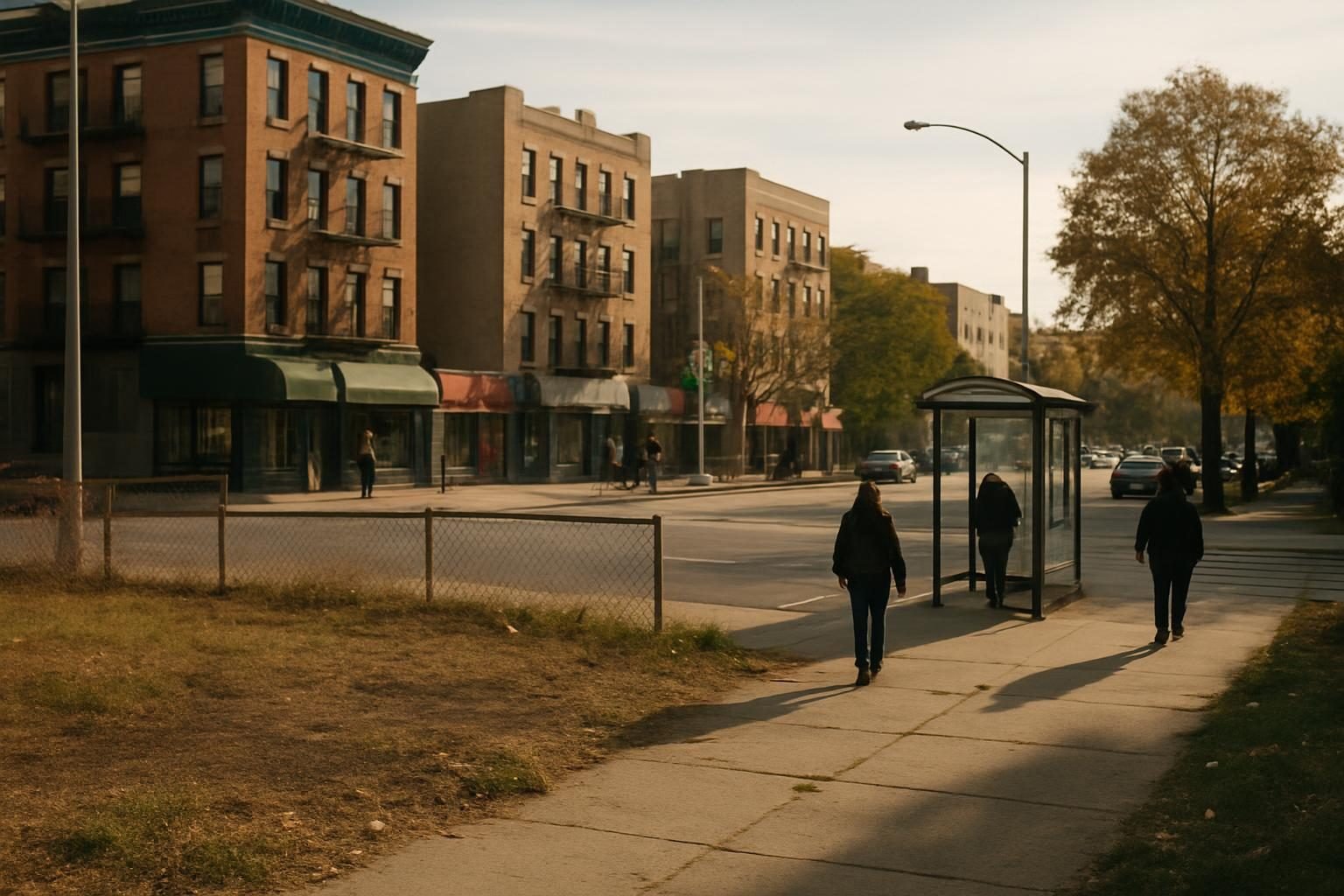
Zoning and land use: shaping what gets built
Zoning is a set of local rules that says what can be built where and how land can be used. One area may be limited to single-family homes, another allows apartments, another allows shops or factories. Councils often make final decisions on rezoning requests, large developments and changes to the zoning code, usually after recommendations from a planning commission.
Zoning sounds dry, but it affects rent, home prices, traffic, schools, jobs and the look of a neighborhood. That is why meetings on a single apartment building can draw a crowd.
The arguments, laid out fairly
Zoning is a good example of a question where both sides have real points.
- Supporters of tighter local control argue that residents should have a strong say in the character of their neighborhood, that new development can strain roads and schools, and that protecting existing homeowners is a legitimate goal.
- Supporters of loosening restrictions argue that limits on new housing can raise prices, that more homes in more places can improve affordability, and that rules written for one era may block what a growing community needs.
These are interpretations and values layered on top of facts. The facts include that zoning limits supply in some places and that development has real local costs. How to weigh neighborhood stability against affordability is a values question, and honest people land in different places.
History matters here too. In the 20th century, some zoning and related practices were used, in documented ways, to separate neighborhoods by race and class. Historians have written extensively about this, and it is part of why land-use debates can carry deep feeling. Our guide on how policy shaped wealth in America explains how housing rules and finance shaped who built wealth.
A zoning map looks like lines on paper, but it quietly decides who can live where and what neighborhoods become.
Police oversight and public safety
In most cities, the police department is part of the executive side of government, run by a chief who reports to a mayor or city manager. The council does not usually direct individual police operations. What it does control is important, though.
What a council can typically do
- Set the police budget, including staffing levels and equipment.
- Pass ordinances that affect policing, such as rules on certain practices or reporting requirements, where state law allows.
- Approve labor contracts with police unions, which can shape discipline procedures and working conditions.
- Create or fund oversight bodies, such as civilian review boards or an independent auditor, with whatever powers the city and state permit.
- Hold hearings and ask for data from the chief or city manager.
The limits are real. State law often governs police discipline, certification and bargaining, so councils may have less room than residents expect. The strength of civilian oversight varies enormously. Some boards can only advise, while others can investigate or recommend discipline.
People disagree about how much oversight is right. Some emphasize accountability and transparency as the foundation of public trust. Others emphasize officer morale, due process for employees and the need to keep departments able to recruit and respond. Both concerns involve real tradeoffs, and the evidence on specific reforms is mixed and still debated. The broader history of policing and the justice system is explored in our summary of The New Jim Crow, a widely discussed and also contested argument about mass incarceration.

The everyday stuff: services, permits and appointments
Beyond the headline fights, councils handle a long list of ordinary business. This is often where most of their time goes.
- Approving contracts for road work, water systems and equipment
- Appointing residents to boards such as planning, parks or library commissions
- Setting fees and approving permits or licenses for certain businesses
- Responding to constituent complaints and routing them to the right department
- Placing questions on the ballot or acting on measures that voters may decide
Many councils use a consent agenda, a bundle of routine items passed together in one vote to save time. Residents can ask for an item to be pulled out for separate discussion. For more on how this level of government touches daily life, read how local governments quietly shape your daily life more than Congress.
How to speak at a city council meeting
This is the part most people never try, and it is easier than it looks. Council meetings are open to the public in nearly every state, and most include time for residents to speak. Exact rules differ, so treat the steps below as a general roadmap and confirm details with your city.
Before the meeting
- Find the agenda. Cities typically post it on their website a few days ahead. Look for the item you care about.
- Learn the sign-up rules. Some cities use a paper card at the door, others an online form or a phone call to the city clerk.
- Know your time limit. Public comment is often limited to a few minutes per person, sometimes about two or three.
- Write down your point. One clear request beats five scattered complaints.
At the microphone
- State your name and neighborhood if asked.
- Say what you want the council to do, such as vote yes, vote no or delay a decision.
- Give one or two concrete reasons, ideally a personal example or a fact you can point to.
- Stay on the topic, stay within your time and speak to the council as a group.
If speaking in public makes your stomach flip, you have other options. Most cities accept written comments by email or online forms, and you can contact council members directly, since their offices are often more reachable than people assume. Attending and simply listening is also useful. Showing up regularly teaches you how decisions really get made. For ideas on other ways to take part, see What Is Civic Engagement? 15 Ways to Show Up Beyond Voting.
Think about it: Think of one decision made by your city in the past year, such as a new development, a budget cut or a policy change. Who benefited, who bore the cost and who was in the room when it was decided? What would you have wanted the council to hear before it voted?
Why so few people show up, and why that matters
Local elections often draw far lower turnout than national ones, and many council meetings are attended by a handful of residents. That can create a lopsided picture. The people who attend regularly are often those with the most at stake in a specific issue, such as homeowners near a project, business owners or organized advocacy groups. Their views are legitimate, but they are not always the whole community’s.
This is not a sign that anyone is cheating. It is a predictable result of how attention works: national politics is loud and local politics is quiet, so people follow what is loud. Our guide to how news shapes what you believe explains part of why that happens. The upside is that, at the local level, a few thoughtful voices can carry unusual weight.
If this sparks an interest in doing more, you might one day consider running yourself. We outline the basics in How to Run for Local Office: A Beginner’s Roadmap. And if you want to build the habits behind all of this, start with what civic literacy actually looks like in everyday life.
You can also explore more explainers like this in our Civic Foundations category.
Key takeaways
- A city council is the local legislature: it passes ordinances, adopts the budget and sets policy for city services.
- Its powers come from the state, so what a council can do varies by state and by city charter.
- The budget is where priorities become real, and budget hearings are among the best moments to be heard.
- Zoning decisions shape housing, rents and neighborhoods, and involve real tradeoffs that reasonable people weigh differently.
- Councils influence policing mainly through budgets, ordinances, union contracts and oversight bodies, within limits set by state law.
- Speaking at a meeting is simple: check the agenda, sign up, make one clear request and keep it short.
Frequently asked questions
Is a city council the same as a mayor?
No. In most cities the council is the legislative body that passes ordinances and approves the budget, while the mayor or city manager runs day-to-day operations. Some cities give the mayor strong powers, including a veto. Others make the mayor a council member with a ceremonial title. Your city charter spells out the arrangement.
Do city council members get paid?
It varies widely. In many small and mid-sized cities, council service is part-time and the pay is modest or symbolic. In the largest cities, council members often work full time and earn a salary. Check your city’s website or charter for the current figures.
Can I speak at a city council meeting if I don’t live in the city?
Often yes, but rules differ. Many councils reserve general public comment for residents, while others allow anyone to speak, especially on agenda items. Look at the council’s posted rules of procedure or call the city clerk to confirm before you go.
How is a city council different from a county commission or school board?
They are separate governments with separate jobs and often separate elections. A city council governs within city limits. A county board covers a larger area and handles things like courts, public health and jails in many states. A school board runs public schools, which we cover in What Does a School Board Do and Why Should You Care? Their territories can overlap, which is why it helps to know who is responsible for what.
Can a city council override state or federal law?
No. Cities are creatures of their states, and state law generally outranks local ordinances. How much freedom a city has, often called home rule, depends on the state. Councils can act in the space their state allows, and disputes over that space are common. Always check your current local and state sources, since laws and rules change.