
In January 1961, a retired five-star general who had just spent eight years as president used his final address to warn Americans about the very institution he had spent his life inside. Decades later, people still argue about what he meant. So what is the military-industrial complex, and does his warning still apply?
Quick answer: The military-industrial complex is the network of relationships among the armed forces, private defense contractors, and the lawmakers who fund them. President Eisenhower warned that this combination could gain influence over public policy beyond what citizens intend. It describes a system of incentives, not a secret conspiracy, and Americans across the spectrum debate how big the problem is and what to do about it.
Where the phrase came from
Dwight D. Eisenhower led Allied forces in Europe during World War II before serving two terms as president, from 1953 to 1961. On January 17, 1961, three days before leaving office, he gave a televised farewell address. Most of it was a reflection on peace, prosperity, and the Cold War.
In one passage, he described something new in American life. For most of the country’s history, the United States had no permanent arms industry. When wars came, factories converted to making weapons, and when wars ended, they converted back. The Cold War changed that. A large, permanent defense establishment now existed alongside a large, permanent arms industry.
Eisenhower said this was necessary given the dangers of the time, but he also said its total influence, economic, political, even spiritual, was felt in every city, statehouse, and federal office. He urged citizens to guard against the acquisition of unwarranted influence, whether sought or unsought, by this combination. In his words, only an alert and knowledgeable citizenry could keep it in balance with the nation’s peaceful goals and democratic values.
Notice what he did not say. He did not call for abolishing the military or accuse anyone of treason. He called for vigilance, and for citizens who understand how the system works.
How the system actually works
To understand the idea, it helps to look at the main players and what each one wants. This is a classic case of systems thinking: the behavior of the whole comes from the incentives of the parts, not from any single villain.
| Player | What it wants | What it does |
|---|---|---|
| The armed forces | Capabilities to meet threats, and budgets to sustain them | Request weapons, equipment, and personnel; define requirements |
| Defense contractors | Revenue, profit, and stable long-term contracts | Design and build systems; employ workers; lobby and donate |
| Congress | Security for the country, and jobs and investment back home | Appropriates funds, oversees programs, and often protects local facilities |
| The executive branch | A strong national defense and foreign policy tools | Proposes budgets, negotiates contracts, deploys forces |
| Communities and workers | Stable paychecks and local economic health | Support programs that employ them, sometimes regardless of national need |
None of these goals is shady on its face. A soldier wants good equipment. A company wants to be paid. A representative wants to protect jobs in the district. The question is what happens when all of these reasonable interests point the same direction, toward more spending, and few forces push back.
The revolving door and the lobbying layer
Two features often get attention. First, people move between roles: a retired officer joins a contractor’s board, or a former industry executive takes a Pentagon post. Supporters say this brings valuable expertise; critics say it blurs loyalties. Second, defense companies employ lobbyists and, through employee-funded committees, contribute to campaigns. If you want to see how that machinery runs in general, our guide to how lobbying works explains why it is legal and how it shapes decisions, and our piece on how political campaigns are funded covers the money side.
The concern was never a secret plot. It was a set of ordinary incentives that all point the same way.

The case that the concern is real
Critics, who come from both left and right, make several arguments. Libertarians and fiscal conservatives worry about waste and the growth of government. Progressives worry about priorities and about foreign entanglements. Some national-security veterans worry about procurement failures. This reflects broader political polarization on defense policy. Here is the strongest version of their case.
- Spending can outrun threats. When budgets are protected by jobs in many congressional districts, cutting a program can be politically costly even if the military says it no longer needs it.
- Cost overruns are well documented. Government auditors have repeatedly reported major weapons programs running over budget and behind schedule. When a contractor has few competitors, there is less pressure to control costs.
- Consolidation reduces competition. Over the decades, the number of major prime contractors shrank substantially through mergers. Fewer sellers can mean less bargaining power for the government as buyer.
- Influence can tilt the debate. When many voices in the conversation about threats and responses have a financial stake, it can be hard to separate analysis from advocacy.
This connects to a broader pattern we cover in what regulatory capture is, where the agencies meant to oversee an industry end up serving its interests.
The case for the current system
Defenders make arguments that deserve a fair hearing, too.
- Deterrence works best when it is credible. A military that is clearly capable and technologically ahead may discourage rivals from testing it. Falling behind can be more dangerous than overspending.
- Complex weapons need specialized firms. Building submarines, aircraft, and satellites requires skilled workforces and facilities that cannot be spun up overnight. Maintaining that industrial base in peacetime is a deliberate choice.
- Private competition drives innovation. Defense research has contributed to technologies later used in civilian life, such as the early internet and GPS, though how much credit belongs to defense spending versus other factors is debated.
- Oversight exists. Congress holds hearings, inspectors general investigate, auditors report, and the press digs. The existence of these checks suggests the system is not unaccountable, even if it is imperfect.
- Jobs are real. Defense employs many Americans, directly and indirectly, and those families are not villains.
Separating facts, interpretations and values
This debate gets muddy because three different kinds of claims get tangled together. Pulling them apart helps.
- Facts: How much does the country spend? How many contractors are there? How often do programs exceed their budgets? These can be checked against public data from sources such as the Congressional Budget Office, the Government Accountability Office, and the Department of Defense.
- Interpretations: Does industry influence cause overspending, or does spending reflect genuine threats? Reasonable people read the same evidence differently, and it is hard to run a clean experiment on a nation’s security.
- Values: How much risk should the country accept? How much should it weigh security against other needs such as health, education, or lower taxes? These are questions of priorities, and no dataset can answer them for you.
Much of the shouting happens when someone treats a values disagreement as if it were a factual one, or the reverse.
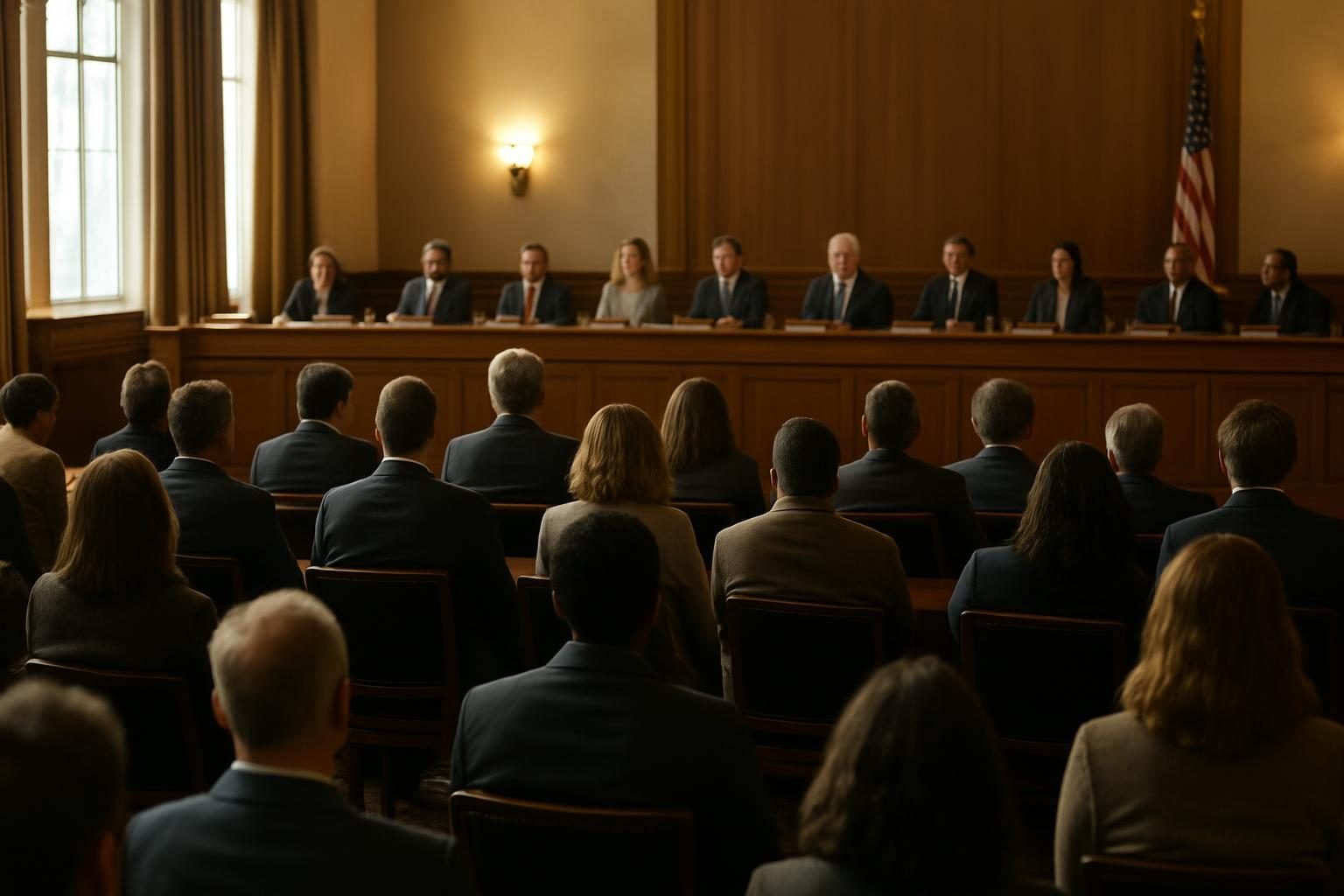
Vigilance is not hostility. A citizen can respect the military and still ask hard questions about how its budget is built.
Why this matters beyond defense
The military-industrial complex is the most famous example of a broader pattern: concentrated benefits and diffuse costs. A contractor and its workers feel the gain from a program intensely. The taxpayer who funds it feels a tiny share of the cost and rarely organizes around it. The same dynamic appears in agriculture, health care, finance, and many other sectors. Our hub on who has power in America explores how these patterns work across the system.
It also touches how Congress itself operates. Federal budgets move through the committee process described in how a bill becomes a law, and the Constitution gives Congress the power to raise armies and fund them, while the president serves as commander in chief. That division is a deliberate feature of the separation of powers.
A related idea is the use of incentives in politics as a lens: ask who gains, who pays, and who is organized to speak. That question works on any policy fight, from defense budgets to farm subsidies.
How has it changed since 1961?
The landscape Eisenhower described has shifted in several ways, and it is worth being careful about what we claim.
- Fewer, larger firms. Mergers in the 1990s left a handful of giant prime contractors, though a wide web of smaller subcontractors remains.
- Technology companies are more involved. Software, cybersecurity, drones, and artificial intelligence have brought newer firms into defense work, which some see as healthy competition and others see as expanding the web of interests.
- Spending is global and large. The United States spends more on defense than any other country, in recent years roughly 800 to 900 billion dollars annually. That figure is approximate and varies by year and by what is counted, so check current official sources.
- Share of the economy has fallen. Measured as a percentage of the overall economy, defense spending is lower than during the Cold War peak, even though the dollar amounts are large. Both facts are true, which is part of why the debate stays unsettled.
Another piece of the story is the money that flows into politics around all of this. Readers curious about that can explore Citizens United and campaign money, and watch for our coming guide on what dark money is.

What can an ordinary citizen do?
Eisenhower’s closing point was about citizens, not institutions. A few practical habits follow from it.
- Read the primary sources. Budget documents and audits from the Government Accountability Office are public. You do not need to trust anyone’s summary, including ours.
- Notice incentives on every side. Contractors, think tanks, advocacy groups, and media outlets all have interests. Our media literacy guide can help you weigh sources.
- Look local. Many communities have a base, a plant, or a supplier. Understanding your own region’s stake makes the abstract debate concrete.
- Talk across the aisle. This is one of the few issues where critics and defenders show up in both parties. Our guide to talking about politics with family offers practical tips.
- Show up beyond voting. See 15 ways to show up beyond voting for ideas.
Think about it: Imagine a factory in your community that builds parts for a weapons program the military says it no longer needs. How would you weigh the national interest against the neighbors whose jobs depend on it? What would a fair process for that decision look like?
Key takeaways
- The military-industrial complex is the web of ties among the armed forces, defense contractors, and lawmakers; the phrase comes from Eisenhower’s 1961 farewell address.
- Eisenhower accepted that a strong defense was necessary. His warning was about unchecked influence and the need for an alert public.
- The concern is about incentives, not conspiracy. Each player has understandable goals, and together they can push spending in one direction.
- Critics point to cost overruns, consolidation, and political influence; defenders point to deterrence, specialized industry, and existing oversight.
- Facts, interpretations, and values are different things. Checking public budget data and auditor reports is the best starting point for your own view.
- The pattern of concentrated benefits and spread-out costs shows up well beyond defense, so understanding it is a general civic skill.
If you want to go deeper into the history, our guide to American history that explains today places the Cold War in context. For more on how incentives shape institutions, browse the Power & Incentives category.
Frequently asked questions
What is the military-industrial complex in simple terms?
It is the web of relationships among the military, defense contractors, and the lawmakers who fund them. Each has its own incentives, and together they can shape how much the country spends on defense and where that money goes. The term describes a system of incentives, not a secret club.
Who coined the term military-industrial complex?
President Dwight D. Eisenhower popularized the phrase in his farewell address on January 17, 1961. He was a five-star general and a war hero, which is part of why the warning carried so much weight.
Is the military-industrial complex a conspiracy?
No. Most of what the term describes happens in public: contracts are awarded, budgets are debated, and lobbyists register. The concern is about structural incentives and influence, not a hidden plot. Whether those incentives distort policy is the real debate.
How much does the United States spend on defense?
The US spends more on its military than any other country, in recent years roughly 800 to 900 billion dollars annually, or somewhere around 3 percent of the economy. These figures are approximate and change every year, so check the Congressional Budget Office or the Department of Defense for current numbers.
What do defenders of defense spending say?
Supporters argue that a strong, technologically advanced military deters aggression, protects allies, and requires private-sector expertise that only large firms can provide. They also note that defense research has produced civilian technologies and that some capabilities must be maintained even in peacetime.