
You can read every word of a law and still not know how it will treat you. The difference is often made by a person at a desk, a counter, or a classroom door who has to decide what the law means in your case today. Political scientists have a name for this, and once you see it, you will notice it everywhere.
Quick answer: Street-level bureaucracy is the work of frontline public employees, such as teachers, police officers, caseworkers, and clerks, who deal directly with citizens and have room to interpret rules. Because they decide how policy is applied, their daily choices become, in practice, the policy people experience.
What is street-level bureaucracy?
The term comes from the political scientist Michael Lipsky, whose 1980 book on the subject made it famous. He used it to describe public workers who interact directly with the public and have discretion, meaning the freedom to use judgment in applying rules, over how benefits and penalties are handed out.
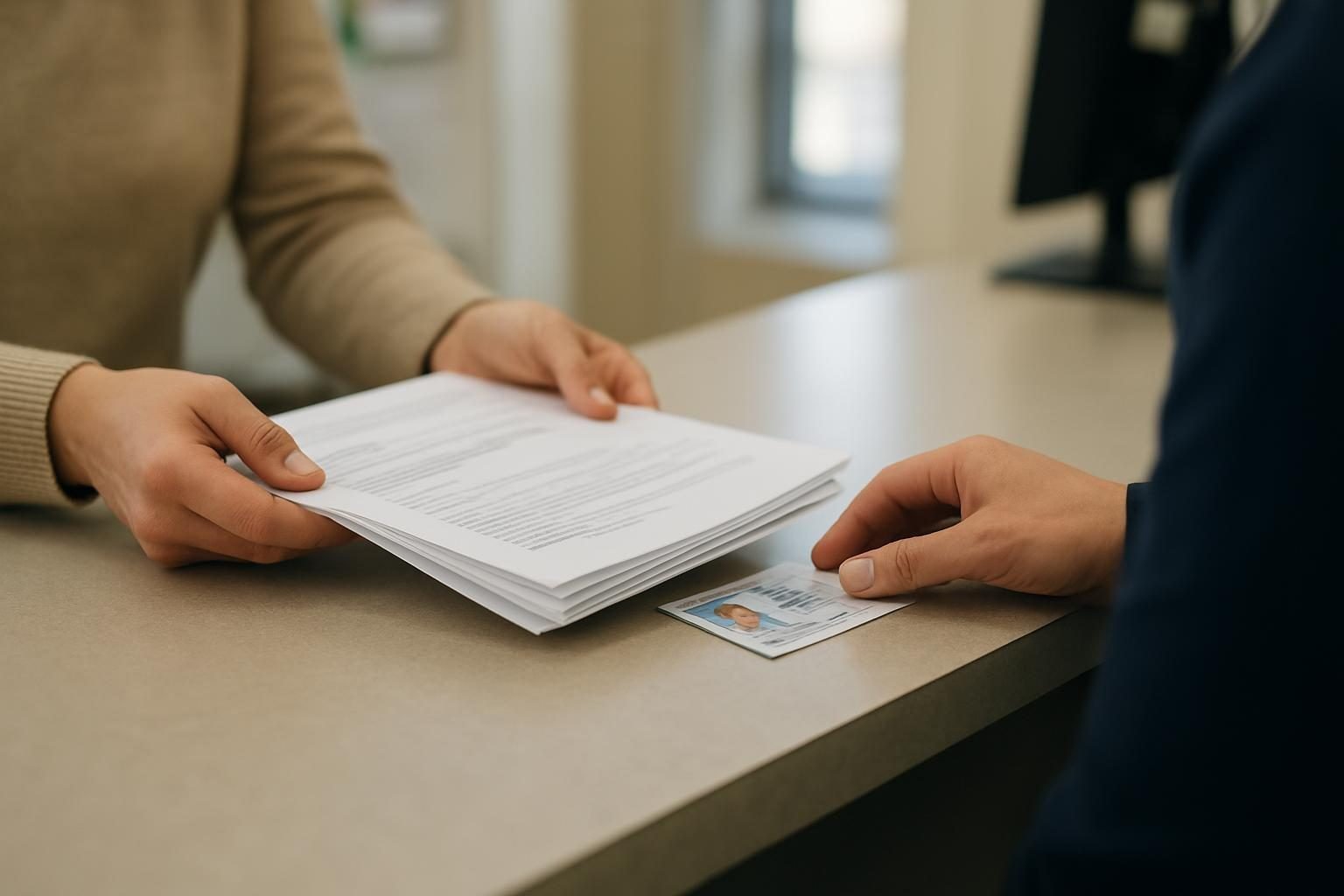
Think of the people you actually meet when you meet “the government.” The DMV clerk. The teacher. The police officer on patrol. The caseworker reviewing a benefits file. The permit counter staffer. The judge’s clerk who decides whether your paperwork is complete.
These are the “street level” of a bureaucracy, the place where abstract rules meet real people. Lawmakers write the policy, but these workers deliver it. And delivery is never mechanical.
Why the clerk has more power than the law
A law is a general instruction. Real life is specific, messy, and full of cases nobody imagined. Someone has to bridge the gap, and that someone is the person standing in front of you.
That is why a rule can look identical on paper in two offices and feel completely different in each. The text is the same. The interpretation, the pace, the tone, and the willingness to help are not.
Three ingredients that create the power
- Discretion: Rules cannot cover every situation, so workers must judge what applies.
- Autonomy from oversight: Much of the work happens one-on-one, where supervisors are not watching.
- Control over access: These workers often decide who gets a service, a benefit, a permit, or a warning instead of a penalty.
Put those together and you get influence that is easy to overlook. A single decision may be small. Multiplied across thousands of workers and millions of encounters, the pattern becomes the real policy.
A law is only a promise until someone at a counter decides what it means for you.
Why discretion cannot be eliminated
It is tempting to think the solution is more detailed rules. Remove the judgment, remove the problem. But rulebooks run into a stubborn limit.
Imagine a teacher facing a student who misses a deadline. A rule says late work loses points. Does it matter if the student was caring for a sick sibling? A rule that tries to list every excuse becomes enormous and still misses cases. A rule that ignores context produces results most people find unfair.
So discretion is not a flaw that crept into the system. It is what makes the system workable at all. The real question is how it is guided, checked, and shared fairly.
How workers cope when the job is impossible
Lipsky’s central insight was that frontline workers often face the same pressures: too many cases, too few resources, vague goals, and demands that conflict. Research since then has generally supported the idea that these conditions shape behavior in predictable ways.
When there is more demand than time, workers develop shortcuts. These are not usually acts of laziness or malice. They are survival strategies in a job that cannot be done perfectly.
| Pressure on the worker | Common coping response | Effect on the public |
|---|---|---|
| Too many cases, too little time | Rationing attention, triaging, or limiting information about options | People who know how to ask get more than those who do not |
| Vague or conflicting goals | Focusing on measurable tasks over harder-to-measure outcomes | Paperwork gets done, but the underlying need may be missed |
| Limited resources | Creating routines and categories to sort people quickly | Efficient, but individual circumstances can get lost |
| Difficult or hostile encounters | Mentally distancing, or favoring “easier” clients | Unequal treatment, even without any intent to discriminate |
Notice what is missing from this table: villains. The system itself creates the pressure, and ordinary people adapt to it. That is why understanding the incentives matters more than hunting for someone to blame. Our guide to systems thinking for citizens explores why good people inside strained systems often produce results nobody wanted.
Everyday examples
The classroom
Federal and state rules set broad education requirements, and a district adopts policies. But a teacher decides which students get extra help, how discipline is handled in the moment, and how lessons actually unfold. Two classrooms under the same school policy can be very different places. For the layer above them, see what a school board does.
The patrol officer
Laws cannot be enforced everywhere at once, so officers choose where to focus, when to warn, and when to cite or arrest. Public debates about policing often come down to how much discretion is appropriate and how it is overseen. People hold sharply different views here, from those who want more flexibility to use judgment to those who want tighter written rules—a reflection of broader political polarization—and both sides are responding to real tradeoffs.
The benefits caseworker
A caseworker reviewing an application may decide whether documents are sufficient, how clearly to explain options, and how quickly to move a file. Eligibility rules are set elsewhere, but access is shaped here. Scholars of public administration have long noted that paperwork burdens and wait times can influence who ultimately receives help, sometimes as much as the formal rules do.
The permit counter
Local governments set zoning and building rules, often through a body like the city council. But a staff member decides whether an application is complete, which questions to ask, and how to read an ambiguous code. For a small business owner or a homeowner, that interpretation can mean months of difference.
Most unfairness at the counter comes from strained systems and unclear rules, not from people who set out to cause harm.

Why this matters for how we argue about politics
Much of our national debate focuses on the top: who passes which law, who wins which election. That is important. But if you care about what a policy actually does, you have to follow it all the way down to the person who applies it.
Here is a useful way to see the layers, which our explainer on how the U.S. government works covers in more depth:
- A legislature passes a law, often in broad language. (See how a bill becomes a law.)
- An agency writes rules and guidance to fill in the details.
- Managers turn that guidance into procedures and forms.
- Frontline workers apply those procedures to real people, using judgment.
At each step, someone interprets and fills gaps. By the time a policy reaches you, it has passed through several sets of hands. This is also why the same law can work differently across states and cities, a theme we explore in what federalism is.
Different people read this differently
People draw different lessons from this, and each view has a strong case.
Some conclude that discretion is a risk. When individual workers can interpret rules, similar people may be treated differently, and accountability gets blurry. On this view, clearer rules, better data, and tighter oversight protect fairness and the rule of law.
Others conclude that discretion is a strength. Frontline workers see context that distant rule-writers cannot, and the ability to bend a rule to fit a real situation is often what makes a public service humane and effective. On this view, over-rigid rules produce absurd or cruel results and drive good workers out.
The evidence suggests both concerns are real. Studies of public services generally find that discretion can produce both helpful flexibility and unequal treatment, depending on how it is structured, supported, and monitored. How much discretion is right, and in which jobs, is partly a question of values: how much we prize consistency versus responsiveness.
Where this connects to power and incentives
Street-level bureaucracy is a reminder that power in a democracy is not only held at the top. It is distributed, sometimes in unexpected places. For a wider view, see our guide to who has power in America, and the broader Power & Incentives category.
It also connects to how rules get shaped by the people they regulate. At the top, regulatory capture describes agencies drifting toward the interests they oversee. At the bottom, street-level workers face their own pressures: caseloads, targets, and the daily reality of the people in front of them. Both are stories about incentives, a lens we explain in follow the incentives.
Finally, it touches a charged phrase in our politics. When people talk about the civil service as a hidden force, they often mean something different from what researchers describe here. We unpack that in what people mean by the deep state. The street-level view offers a simpler, less dramatic truth: public employees mostly spend their days managing too much work with too few resources.

What can citizens actually do?
Understanding this can change how you deal with public systems, and how you think about reform.
- Be specific and prepared. Bring documents, ask clear questions, and write down names, dates, and what you were told.
- Use the appeals process. If a decision seems wrong, ask what the formal appeal or review steps are. A first answer is not always the final one.
- Be kind, within reason. Frontline workers face difficult days. Courtesy does not replace persistence, but it often helps.
- Ask about the system, not just the person. If many people hit the same wall, the problem is probably the design, not one worker.
- Show up locally. Staffing, budgets, and procedures are often set by local bodies. See how local taxes are decided and ways to show up beyond voting.
Think about it: Think of a time a public worker, such as a teacher, clerk, officer, or nurse, made a difference in how a rule affected you, for better or worse. What do you think shaped their decision: their personality, their training, their workload, or the rules themselves? How would you want discretion handled in that job?
Key takeaways
- Street-level bureaucracy refers to frontline public workers whose daily judgment calls shape how policy is actually experienced.
- Discretion is unavoidable because no rulebook can anticipate every real situation.
- Workload and resource pressure push workers toward shortcuts, which usually reflect system strain, not bad intent.
- Reasonable people disagree about whether to tighten rules for consistency or preserve flexibility for responsiveness.
- To understand what a policy does, follow it all the way down to the person who applies it.
- Citizens can improve outcomes by being prepared, using appeals, and engaging with the local bodies that set procedures and budgets.
Frequently asked questions
Who coined the term street-level bureaucracy?
The political scientist Michael Lipsky popularized the term in his 1980 book Street-Level Bureaucracy: Dilemmas of the Individual in Public Services. He studied how frontline public workers, such as teachers, police officers, and caseworkers, effectively make policy through the choices they make every day.
Is discretion the same as corruption?
No. Discretion is the legitimate room a worker has to interpret rules and decide how to apply them. Corruption is the abuse of public power for private gain. They can overlap in bad cases, but most discretion is ordinary judgment made necessary by rules that cannot foresee every situation.
Why not just write more detailed rules to remove discretion?
Detailed rules help in some areas, but no rulebook can anticipate every real-life case. More rules can also create new gaps, slow service, and make workers apply policies that produce absurd results. Most researchers see the goal as better-guided discretion rather than none at all.
Can street-level bureaucrats be held accountable?
Yes, through supervisors, audits, appeals processes, courts, public records, and elected oversight. Accountability is hard because frontline work is often hard to observe, but outside pressure, clear data, and easy appeals can all improve consistency and fairness.
Does this only apply to government workers?
The classic definition covers public employees who interact directly with citizens and have discretion, such as teachers, police, social workers, and clerks. The same dynamics appear in any large organization where frontline staff must interpret policy, including hospitals and insurers.