Almost everyone agrees that housing costs too much. Far fewer agree on why, and the argument often sounds like two people shouting past each other. This article lays out the two big families of explanation, supply and demand, so you can see what each side actually claims, what evidence it uses, and where the real disagreement lies.
Quick answer: Why is housing so unaffordable? Supply-side thinkers say too few homes are built where people want to live, mainly because of regulation and costs. Demand-side thinkers say financing, incomes, investors and population growth push prices up. Most evidence suggests both matter, and the true divide is over which matters most and what to do about it.
This piece is about the debate, not a full list of causes. For the broader picture of what drives costs, see our guides on why houses are so expensive right now and why rent is so high.
First, a quick refresher on supply and demand
Supply is how many homes exist or can be built. Demand is how many people want homes and can pay for them. When demand rises faster than supply, prices climb. When supply catches up, prices tend to stabilize.
Housing is a strange market, though. Homes are expensive, slow to build, tied to a specific place, and shaped by local rules. You cannot ship a house from a cheap city to an expensive one. That is why the debate gets so heated: small differences in how you read the evidence lead to very different conclusions.
The supply-side argument: not enough homes where people want them
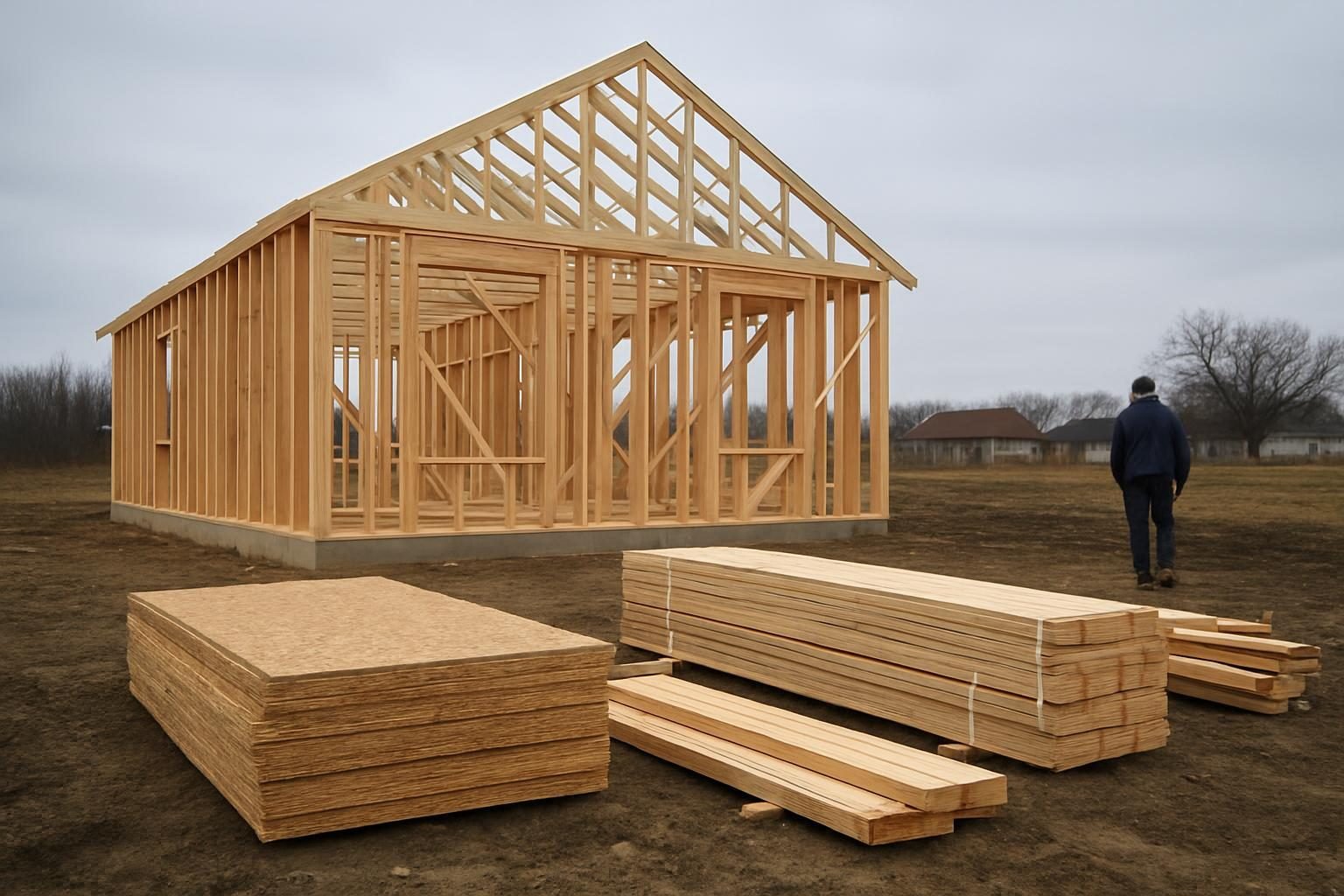
The supply camp starts with a simple claim: in many high-cost regions, the number of homes has not kept up with the number of households. The result is a bidding contest, and the winners are people with the most money.
What supply-side thinkers point to
- Local land-use rules. Zoning can limit the type, size and density of what gets built. Minimum lot sizes, bans on apartments in large areas, height limits and parking requirements all restrict how many homes fit on a piece of land. See our explainer on exclusionary zoning for how these rules work.
- Slow, costly approvals. Permitting, environmental review and public hearings can add months or years and raise costs, which can make some projects not worth starting.
- Price gaps between cities. Researchers often compare the cost of building a home with the price it sells for. Where the selling price far exceeds construction cost plus the land that would normally be needed, they argue regulation is the likely gap.
- Housing completions over time. Many analysts note that national home building has been below earlier decades for years, especially after the 2008 financial crisis. Estimates of the resulting shortage vary widely, often in the range of a few million homes, and should be treated as approximate.
The incentive story
Supply-side thinkers often stress that this is not about bad people. Existing homeowners have a real financial stake in their neighborhood, and for most families their home is their largest asset. Voting to limit new construction can be a rational way to protect that investment, even if it raises costs for newcomers. This is how city councils and local boards end up making decisions that add up to a regional shortage.
What critics of the supply view say
Skeptics raise fair questions. New construction often arrives as higher-priced units, so does it really help lower-income renters? Some places have added many homes and still see high prices. And building takes years, while families need housing now. Supporters respond that new homes, even pricey ones, can ease competition for older, cheaper ones, a pattern often called “filtering.” Researchers continue to study how strong and how fast that effect is.
Housing is a market where the rules about what can be built are often set by the people who already own homes.
The demand-side argument: too much money chasing too few homes
The demand camp does not deny that building matters. Its emphasis is different: even a generous supply of homes will not be affordable if buying power outruns the average paycheck.
What demand-side thinkers point to
- Population and household growth. When a region adds jobs and people, demand rises. Younger adults forming their own households, or people moving to areas with strong economies, increase competition for homes.
- Interest rates and credit. Mortgage payments depend heavily on interest rates. Cheap, easy credit can raise what buyers are able to pay and lift prices; higher rates can freeze the market. Our guide on how rates affect house prices walks through this.
- Investors and second homes. Purchases by large investors, small landlords and vacation buyers can add demand in certain markets. Estimates of their share vary by city and time period, and the national picture is often smaller than headlines suggest, though local effects can be sizable.
- Stagnant wages relative to housing. If incomes grow slower than housing costs, the gap itself becomes the problem. Here the issue is less the number of homes and more the ability to pay, which links to debates over the value of the minimum wage over time and broader wealth-building policy.
- Subsidies and tax rules. Some argue that tax treatment of homeownership, such as deductions and favorable capital gains rules, boosts demand and capitalizes into higher prices. Others argue these policies help families build wealth. Tax rules change, so check current official sources for details.
What critics of the demand view say
Supply-side thinkers reply that demand has risen in many places without causing the same price spikes. In their view, a flexible supply would respond to demand by building more, so the real bottleneck is the inability to build. Demand-side thinkers answer that supply responds slowly and unevenly, and that credit and investor activity can still push prices in the short run.

Where the two camps actually agree
The public version of this debate often sounds like “builders versus bankers.” The expert version is more overlapping than that. Many analysts who stress supply also accept that interest rates, incomes and credit shape what households can afford. Many who stress demand also accept that restrictive building rules make shortages worse.
- Housing costs vary hugely by region, and both sides treat that as a clue rather than a contradiction.
- Both sides generally agree that construction costs, including labor, materials and land, matter.
- Both acknowledge that rising rates make monthly payments harder, even when prices dip.
- Both accept that lower-income households often need direct help that a market alone may not provide.
Where the debate truly divides
The genuine splits are less about facts and more about weight, causation and values.
| Question | Supply-side lean | Demand-side lean |
|---|---|---|
| Biggest single driver? | Restricted building in high-cost regions | Financing, incomes and buying power |
| Best first fix? | Loosen rules so more homes can be built | Raise incomes, expand aid, or cool speculative demand |
| Role of new market-rate homes? | Eases pressure on the whole market over time | May not reach those who need help most, or arrive too slowly |
| Role of investors? | Real but secondary to scarcity | A meaningful pressure in some markets |
| Main risk of the other view? | Subsidies without more homes may just raise prices | Building alone may leave the poorest behind |
Facts, interpretations and values
It helps to sort the argument into three layers. Facts: how many homes were built, what rates did, how prices moved. Interpretations: how much of a price rise is due to scarcity versus credit. Values: how much to prioritize homeowners’ stability, renters’ access, neighborhood character, local control, or speed of change.
Two people can agree on every fact and still disagree on policy because they weigh those values differently. That is not a failure of reasoning; it is how democratic choices work. Our guide to who has power in America explains why local interests and incentives often shape these outcomes.
Two people can agree on every fact about housing and still disagree about what to do, because they weigh values differently.

Why the evidence is hard to settle
Housing is difficult to study. You cannot run a clean experiment on a city. Researchers compare places, track changes over time and look at natural events, but each method has limits.
- Everything moves together. Jobs, rates, wages and construction all change at once, which makes it hard to isolate one cause.
- Local variation is huge. A finding from a fast-growing coastal metro may not apply to a slower inland city.
- Timing matters. The effects of new building may take years to show up, while interest-rate effects appear within months.
- History shapes the map. Past practices such as redlining and discriminatory covenants influenced where people could buy and build wealth, and their effects persist. For background, see American history that explains today.
This is also why headlines can mislead. A single study or chart can support almost any camp. For tips on reading such claims, see our media literacy guide.
What a practical reader can take from all this
Rather than picking a team, it can be more useful to ask a few questions about any housing claim you hear.
- Is this about a specific place, or the whole country?
- Does the argument address how long the fix would take?
- Who benefits and who pays under the proposal?
- Does it deal with both building and affordability, or only one?
- Is the evidence about prices, rents, or the number of homes, and are those being mixed up?
Much of the real action also happens locally, through zoning votes, budgets and permitting, which is where residents have the most direct voice. If you want to take part, our guide to civic engagement beyond voting is a good starting point, and for broader reading on the topic, browse the Money, Housing & Opportunity section.
Think about it: If you own a home, how might your view of new construction nearby differ from that of a renter who wants to live in your area? Can you describe the strongest version of the other person’s concern?
Key takeaways
- The supply view stresses too few homes where people want them, often tied to regulation and costs.
- The demand view stresses financing, incomes, investors and population growth.
- Most analysts see both forces at work, so the real argument is about weight and priority.
- Disagreements often come down to values, such as local control, speed, and who gets helped first.
- Housing evidence is messy, so be cautious with any single chart, study or headline.
- Local decisions on zoning and permits are where much of this debate becomes real.
Frequently asked questions
Is housing unaffordable because of supply or demand?
Both matter, and almost no serious analyst argues otherwise. The real disagreement is about which factor is most important in which places, and what policy follows. Supply-focused thinkers emphasize the shortage of homes in high-cost metro areas, while demand-focused thinkers emphasize financing, investors, incomes and the money chasing a limited set of homes.
What does ‘supply-side’ mean in the housing debate?
It refers to the number of homes available, and the rules, costs and incentives that determine how many get built. Supply-side arguments usually focus on zoning, permitting, construction costs, land prices and labor. The core idea is that when too few homes are built relative to the number of households, prices and rents rise.
What does ‘demand-side’ mean in the housing debate?
It refers to the forces that increase how many people want to buy or rent, and how much they can pay. That includes population growth, household formation, wages, mortgage rates, easy credit and purchases by investors or second-home buyers. The core idea is that money and buying power, not just building, shape prices.
Does building more housing lower prices?
Many economists find that adding homes tends to ease price and rent growth over time, especially when a lot are built in a short period. Others point out that new construction often targets higher-income buyers, that effects can be slow and local, and that building alone may not reach the lowest-income households or those below federal poverty thresholds. The evidence is real but contested in its details.
Why does housing cost more in some cities than others?
Prices reflect local jobs, local land, local rules and local building costs. Places with strong job growth, limited land and tight restrictions on new construction tend to be the most expensive. Places with slower job growth or fewer restrictions tend to be cheaper, though many have seen sharp increases in recent years too. For a wider look, see why housing is so expensive in America.