
If you have ever wondered why a highway slices through the middle of an old city neighborhood, or why a large, empty stretch of downtown seems to have no history, you may be looking at the fingerprints of urban renewal. It was one of the biggest and most ambitious rebuilding efforts in American history, and one of the most controversial.
Quick answer: Urban renewal was a set of federal, state and local programs, roughly from 1949 into the early 1970s, that paid cities to buy, clear and redevelop areas labeled “blighted.” It aimed to replace decay with modern housing, commerce and roads. But it displaced hundreds of thousands of people, falling especially hard on Black communities, and often delivered less than it promised.
So what was urban renewal, exactly? Why did leaders across the political spectrum back it? And why do historians still argue about what it accomplished? Let’s walk through it, fairly and plainly.
Why American cities wanted to be rebuilt
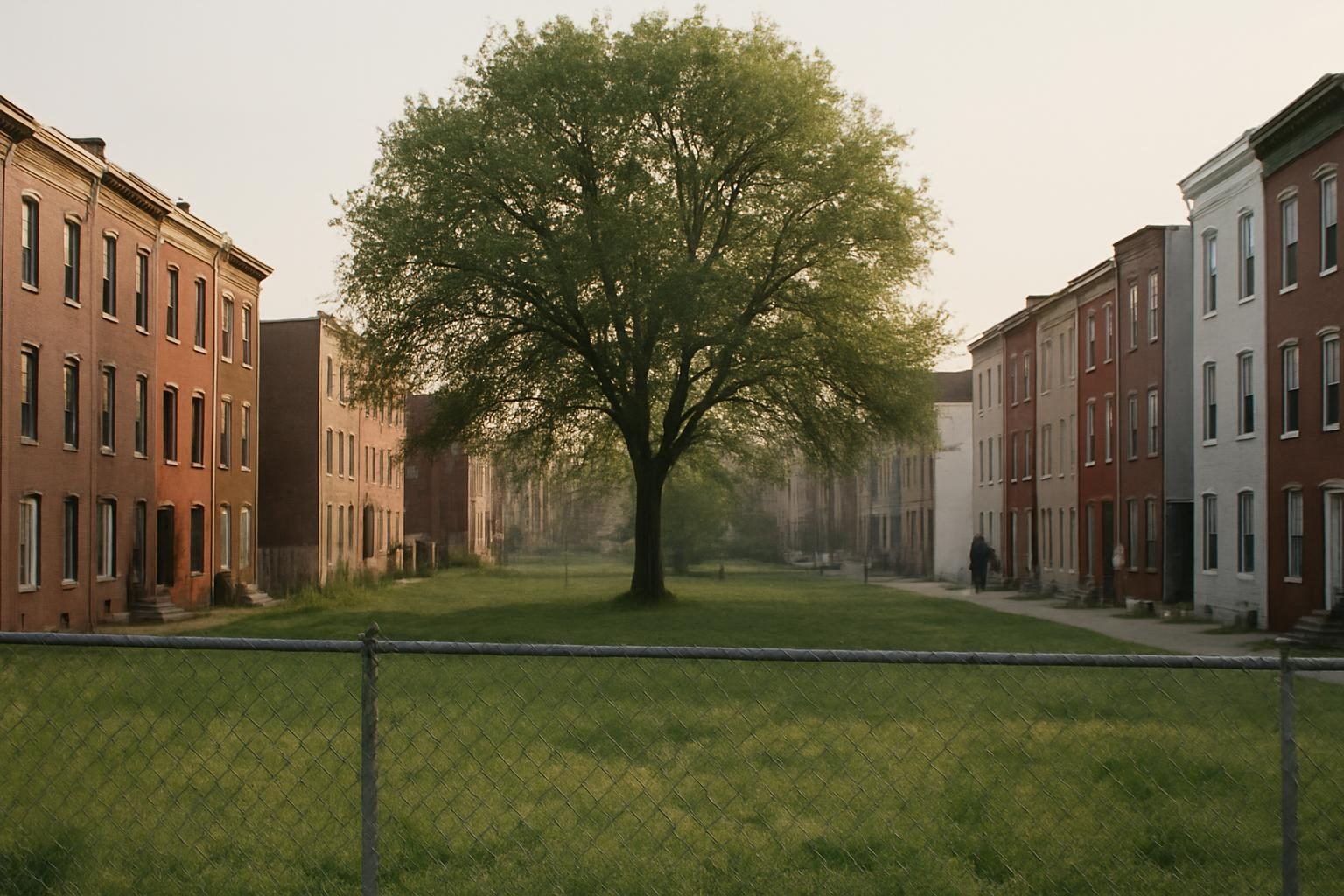
To understand urban renewal, start with the cities of the 1940s. Many had aging housing, crowded apartments and neighborhoods without modern plumbing or heating. Little major construction had happened during the Great Depression and World War II.
At the same time, families with the means to move were heading to the suburbs, helped by cheap mortgages and new roads. Cities worried about losing their tax base: the property and business revenue that pays for schools, police and sanitation. If middle-class residents and downtown businesses kept leaving, city budgets would shrink.
Many city leaders, business owners, planners and reformers sincerely believed that clearing run-down areas and building anew was the answer. Some residents of poor neighborhoods also wanted better housing. That broad coalition helps explain why the idea gained so much momentum.
The ideas behind it
Planners at the time were influenced by a modernist vision: wide roads, tall buildings, open space and a clean separation between living, working and shopping. Older, dense neighborhoods with mixed uses looked chaotic to them. Many saw “blight” as something that could spread like a disease, so the cure was removal.
That framing mattered. Once an area was officially labeled blighted, the legal and financial machinery of clearance could begin. And, as we’ll see, who got to decide what counted as blight shaped everything that followed.
How the programs worked
The turning point was the Housing Act of 1949, which created a federal program to help cities clear “slum” areas. Later laws, especially the Housing Act of 1954, broadened the goal from clearing slums to renewing cities more generally, including commercial and public projects. Congress changed the details many times, so the exact rules varied by period.
The basic mechanism was a partnership. A local agency identified a target area, used a legal power called eminent domain to acquire the property (the government’s power to take private property for public use, with payment of compensation), cleared it, and then sold or leased the land for redevelopment. The federal government covered a large share of the net cost, commonly cited as about two-thirds in the early years. Check historical sources for the specifics of any single program.
The steps, simplified
- Designation: A local authority declares an area “blighted,” often based on survey criteria like building condition and density.
- Acquisition: The city buys the property, using eminent domain if owners will not sell.
- Clearance: Buildings are demolished and residents and businesses must leave.
- Redevelopment: The cleared land is sold or leased, often at a discount, to developers or institutions.
- New use: Housing, offices, highways, hospitals, universities or cultural centers are built.
Notice the incentives. Cities received federal money, developers received cheaper land, and institutions such as hospitals and universities could expand. Residents of the cleared area, who often had the least political power, were the people with the least say. For more on how that kind of imbalance works, see Who Has Power in America? Systems and Incentives Explained.
Highways and the bulldozer
Urban renewal is often mixed up with highway building, so it is worth separating the two. The Federal-Aid Highway Act of 1956 created the Interstate Highway System and committed the federal government to paying the great majority of its cost. This was a different program with different goals, mainly national travel, commerce and defense.
But in cities, the two efforts often worked together. Highway planners needed a path through crowded urban land, and areas already labeled blighted were politically and financially easier to take. In many cities, roads were routed through Black and low-income neighborhoods. Historians continue to debate how much was deliberate and how much was the path of least resistance, but the outcome in many places is well documented.
Whoever draws the map decides which neighborhoods are called blighted, and which ones are called the future.
Who paid the price
Estimates vary, but historians commonly cite figures in the range of hundreds of thousands of households and a million or more people displaced by urban renewal and related highway projects over the decades. Treat any single number as approximate. What is well documented is the pattern: Black residents were displaced at rates far above their share of the population, and small businesses in the cleared areas often never reopened.
Part of the reason traces back to earlier policy. Neighborhoods that had been starved of lending and investment by practices like those described in What Was Redlining? The Maps That Shaped American Cities were more likely to look run-down on a survey, and therefore more likely to be targeted. Segregation also meant that displaced Black families had limited options for where to move. The background is covered in What Were Jim Crow Laws? Segregation Written Into Law and The Great Migration Explained: Six Million Who Moved.
More than buildings
A neighborhood is not just houses. It includes churches, barbershops, corner stores, family networks and the informal ways neighbors look after each other. Black-owned businesses and professionals who served their own communities were often central to local life. When a neighborhood was cleared, these networks were scattered, and many could not be rebuilt.
Displaced families frequently moved into other crowded areas nearby, sometimes pushing up rents and strain there. Public housing built as replacement was often fewer units than were demolished, and in many cities, promised replacement housing took years or never fully arrived. Some of the most famous cases are worth reading about, including the Hill District in Pittsburgh, the Sullivan-area neighborhoods in several cities, and West Philadelphia’s Black Bottom, but local histories differ, so consult good local sources.
The case for urban renewal
Fairness means giving the other side its strongest case. Supporters at the time, and some scholars since, make several arguments.
- Real housing problems existed. Some of the targeted housing was genuinely dilapidated, overcrowded or unsafe, and many residents wanted something better.
- Cities faced real decline. Without major intervention, officials feared a downward spiral of falling tax revenue and abandonment.
- Some projects delivered. Hospitals, universities, cultural centers and downtown investments in some cities did create jobs and lasting institutions.
- Intentions were often sincere. Many planners and officials believed they were helping.
These are facts and arguments worth taking seriously. Where critics disagree is mostly about the tradeoffs, and about who was asked to bear them.
The case against it
Critics, both at the time and in later scholarship, raise their own strong points.
- The costs fell unevenly. Those who lost homes and businesses were often the people with the least political power and the fewest options.
- “Blight” was a fuzzy label. Some cleared neighborhoods were poor but stable, with strong community ties and owner-occupied homes.
- Promises went unmet. Replacement housing was often delayed or insufficient, and some cleared land sat empty for years.
- Compensation was often inadequate. Payments did not always cover the cost of equivalent housing, and in the early years relocation help was limited.
Writer and activist Jane Jacobs, in her 1961 book The Death and Life of Great American Cities, argued that dense, mixed-use neighborhoods were healthier than planners assumed. Her critique helped turn public opinion. Debates over how to measure success still shape how scholars evaluate these programs.
| Question | Supporters tend to emphasize | Critics tend to emphasize |
|---|---|---|
| Was the housing really bad? | Many buildings were unsafe or overcrowded | Labels like “blight” were broad and sometimes applied to stable communities |
| What did cities gain? | Investment, institutions, a stronger tax base | Gains went to developers and institutions more than displaced residents |
| What happened to residents? | Some moved to better housing | Many were scattered, with weak compensation and lost networks |
| Was it intentional discrimination? | Goals were modernization, not exclusion | Outcomes fell hardest on Black communities, whatever the intent |
A program can be well-meant, widely supported, and still leave some families carrying costs the rest of the city enjoyed.
Facts, interpretations and values
It helps to sort the disagreements into layers. The facts are largely settled: the programs existed, large numbers of people were displaced, and Black communities were hit disproportionately. The interpretations are where historians still debate, such as how much was intentional racial targeting versus a system that predictably harmed the politically weakest. The values questions are the hardest: how should a society weigh broad public benefit against concentrated private loss, and what does fairness require when government takes someone’s home?
Reasonable people can land in different places on that last question. A reader who prizes freedom might focus on property rights and limits on government power. A reader who prizes equality might focus on who was treated unequally. Both values are in play, along with responsibility and hope. For how to talk about disagreements like this, see How to Talk About Politics With Family: A Practical Guide.
How it ended and what changed
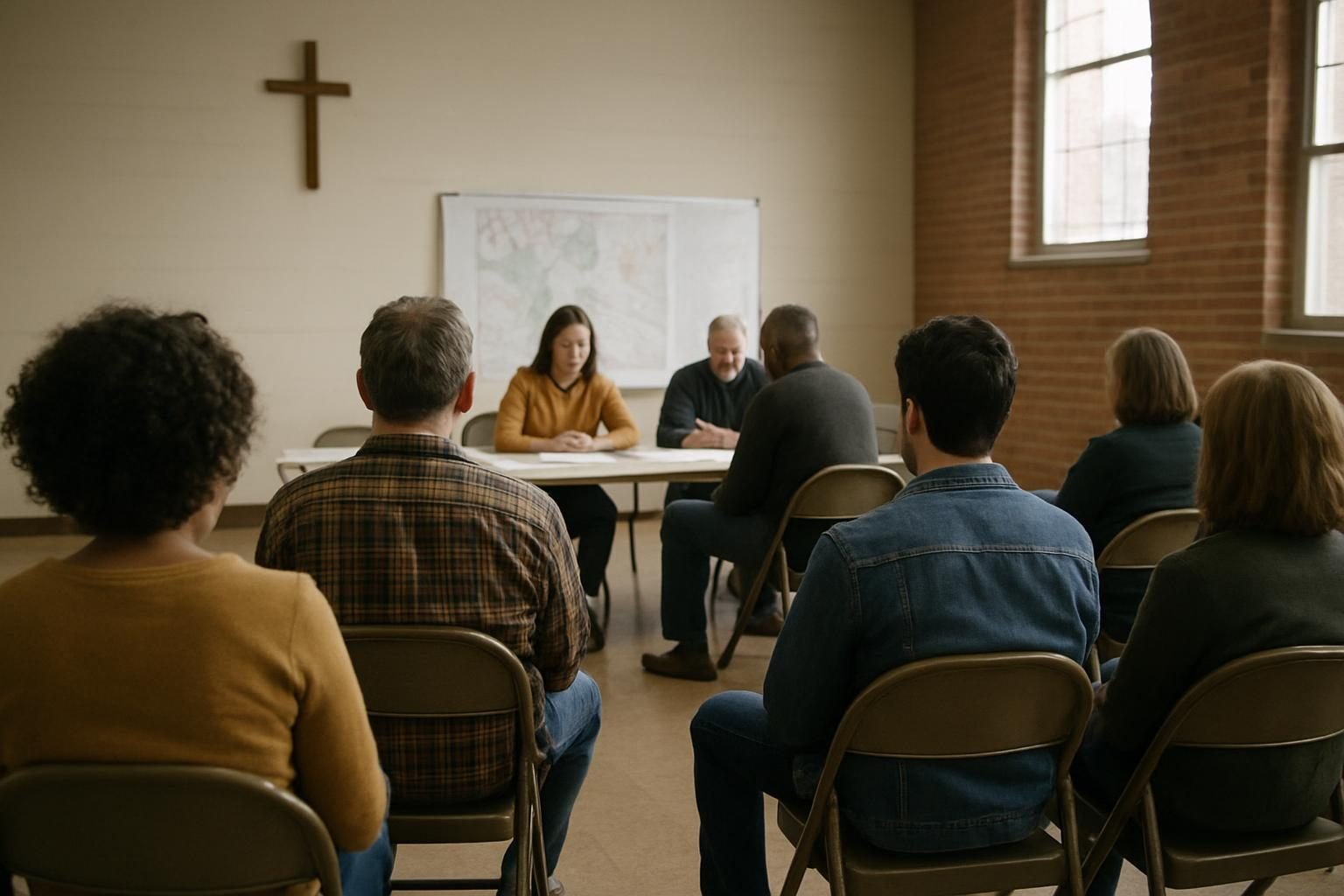
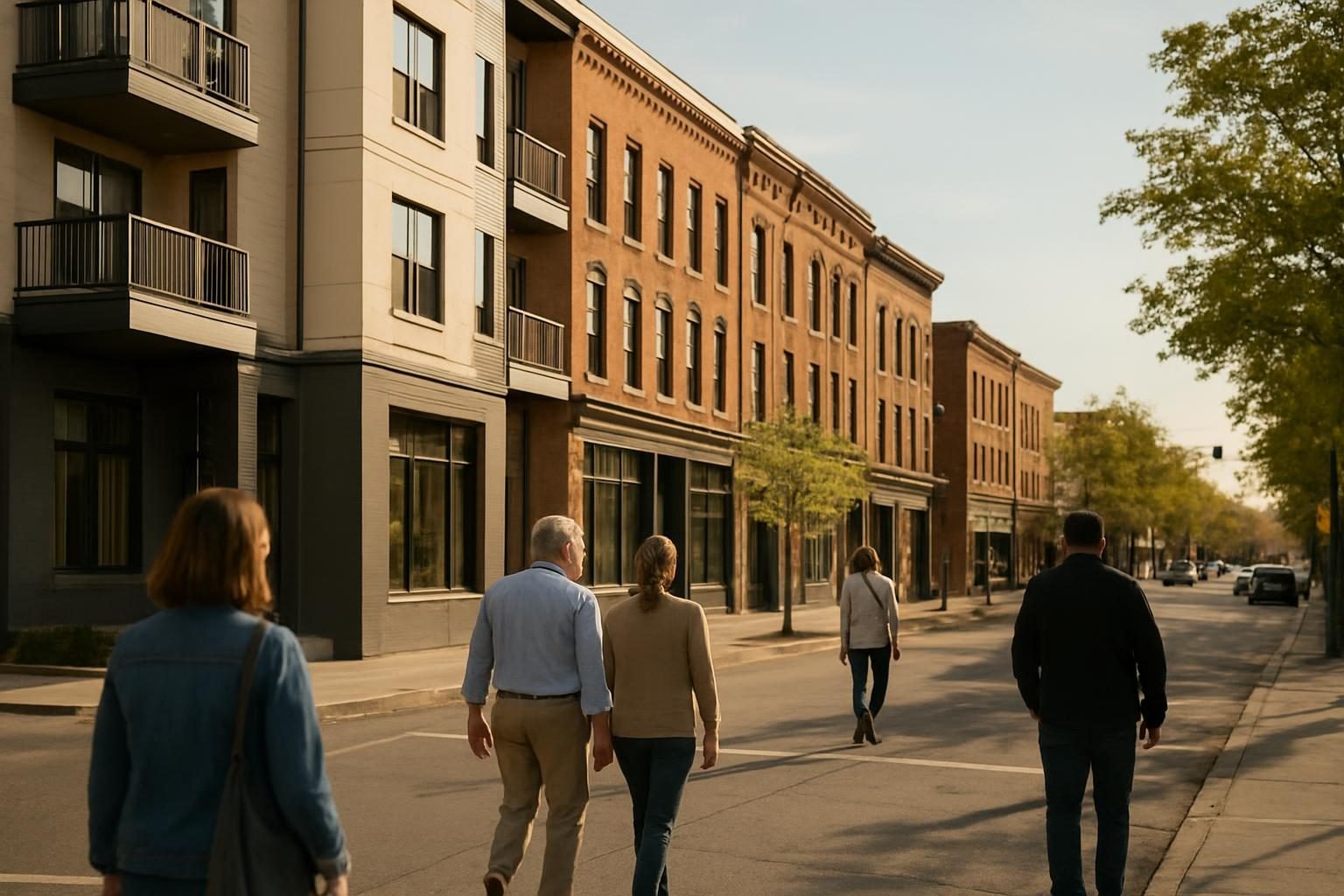
By the 1960s, resistance was growing. Neighborhood groups organized, lawyers and journalists exposed the human costs, and academic critics challenged the assumptions behind clearance. Congress added requirements for relocation assistance, and later laws gave residents more say in planning. In 1974, federal funding shifted toward block grants, which gave cities broader flexibility and effectively ended the original urban renewal programs. Laws and programs have continued to change since then, so check current official sources for today’s rules.
Highway fights also changed things. In several cities, residents blocked or modified planned freeways. Environmental review requirements and stronger public-participation rules came out of that era. To see how local decision-making works now, read What Does a City Council Do? A Plain-English Guide.
Why it still matters
Urban renewal sits inside a larger story about housing, wealth and opportunity. Homeownership is the main way many American families build wealth, so losing a home or being pushed out of a stable neighborhood can echo across generations. That broader picture is explored in How Policy Shaped Wealth in America: A Plain Guide, along with The GI Bill and Black Veterans: Same Law, Unequal Results.
The theme is not unique to housing. The way public power can be used on behalf of some and against others shows up again in the history of schools, courts and law enforcement. See, for example, A History of Policing in America, From Night Watch to Today and The War on Drugs: A History of Policy and Its Results.
Think about it: If a city today wanted to redevelop a struggling neighborhood, what would a fair process look like? Who should have a voice, what should residents be offered, and how would you weigh the benefit to the wider city against the cost to those who live there now?
Key takeaways
- Urban renewal was a federal, state and local effort, from roughly 1949 into the 1970s, to clear “blighted” areas and rebuild them.
- It was separate from, but closely tied to, the Interstate highway program, and the two often reshaped the same neighborhoods.
- Hundreds of thousands of households were displaced, and Black communities bore costs far beyond their share of the population.
- Supporters pointed to real housing problems and city decline; critics pointed to uneven costs, vague labels and unmet promises.
- Facts are largely settled, historians debate intent, and the deepest disagreements are about values and tradeoffs.
- Reforms after the 1960s added relocation help and public input, but the legacy still shapes cities today.
Where to go next
Urban renewal makes the most sense when read alongside the rest of the story. Start with our hub guide, American History That Explains Today: A Plain Guide, or browse everything in the History & Context category. For a deeper reading list, try Books to Understand America: A Reading List by Theme. Then talk about it with someone who sees it differently. That is where understanding actually grows.
Frequently asked questions
What was urban renewal in simple terms?
Urban renewal was a set of federal, state and local programs, mainly from the late 1940s through the early 1970s, that paid cities to buy and clear areas officials labeled “blighted” and redevelop them. The land was often sold to private developers or used for highways, public buildings, hospitals and universities. Many thousands of families and businesses were displaced along the way.
Why is urban renewal called “Negro removal”?
The phrase was used by critics, including writer James Baldwin in a 1963 interview, because so many cleared neighborhoods were Black communities. Historians have documented that Black residents were displaced at rates far higher than their share of the population. Supporters of the programs generally did not intend this as the goal, but the pattern of who bore the costs is well documented.
Did urban renewal and highway building have the same goals?
They were separate programs with overlapping effects. The Housing Act of 1949 and later laws funded slum clearance and redevelopment, while the Federal-Aid Highway Act of 1956 funded the Interstate system. In practice, cities often routed highways through the same neighborhoods they had already labeled blighted, so the two efforts reinforced each other.
Did urban renewal build anything good?
Yes, in some places. Some projects produced hospitals, university campuses, cultural centers, and new housing, and some cities saw real downtown investment. The debate is about the tradeoffs: whether those benefits justified the loss of working neighborhoods, and whether displaced residents received fair treatment and adequate replacement housing.
Are there still programs like urban renewal today?
Cities still use tools such as redevelopment financing, eminent domain, and highway projects, but the rules and politics are different. Laws changed after the 1960s to require relocation help and more public input, and the Supreme Court’s 2005 Kelo decision sparked a national debate about eminent domain. Check current federal, state and local sources for the rules in your area.