Few American groups are remembered in as many conflicting ways as the Black Panther Party. To some it was a menace, to others a shield for neighborhoods that felt abandoned, and to many it was both, depending on the year and the city. This article walks through the history of the Black Panther Party using documented facts, then lays out where honest disagreement remains.
Quick answer: The Black Panther Party was a Black political organization founded in Oakland, California, in 1966. It began by patrolling police with openly carried firearms, then became known for its Ten-Point Program and community services such as free breakfasts and health clinics. It was also marked by armed confrontations, internal conflict and a sweeping FBI effort (COINTELPRO) to disrupt it. It faded by the early 1980s.
The World the Party Grew Out Of
To understand the Panthers, start with what came before them. By the mid-1960s, the civil rights movement had won landmark laws, including the Civil Rights Act of 1964 and the Voting Rights Act of 1965. Yet for many Black Americans outside the South, daily life had not changed much.
Millions had left the South during the Great Migration, hoping for better jobs and fairer treatment. Many found crowded, segregated neighborhoods shaped by redlining, limited job prospects and tense relationships with local police. The legal segregation of the South had been dismantled on paper, but its northern and western cousins, written into housing markets and lending rules rather than statutes, were harder to challenge in court.
In 1965, riots in the Watts neighborhood of Los Angeles, and unrest in many other cities over the following years, showed how much frustration had built up. Meanwhile, some activists lost patience with nonviolent protest as the main strategy. The slogan “Black Power,” popularized in 1966, captured a desire for self-determination, community control and pride. The Panthers were one expression of that mood, though far from the only one. For the wider arc, see our plain guide to American history that explains today.
How the Black Panther Party Began
Huey P. Newton and Bobby Seale, two students who met at Merritt College in Oakland, founded the party in October 1966. They called it the Black Panther Party for Self-Defense. The name reflected the original mission: to monitor local police and protect residents from what they saw as routine harassment and brutality.
Armed patrols and California law
In those early months, members followed police cars, carried firearms openly and stood nearby during traffic stops while reciting legal rights. At the time, California law generally allowed carrying a loaded firearm in public if it was visible. The group saw this as a lawful, constitutional form of self-defense, rooted in the Second Amendment. If you want a refresher on those protections, our Bill of Rights explainer covers them in plain language.
In May 1967, a group of armed Panthers walked into the California State Capitol in Sacramento to protest a bill that would restrict carrying loaded weapons. The images spread nationally. The legislature passed the Mulford Act, which tightened the rules, and the episode made the party famous overnight. It also made the group a top target for law enforcement and a lasting symbol in American media.
Growth beyond Oakland
Within a couple of years, chapters opened in dozens of cities, including Chicago, Los Angeles, New York, Seattle and others. Membership figures from the period are uncertain and often inflated or minimized depending on the source. Commonly cited estimates reach into the low thousands at the peak, with a much larger circle of supporters and sympathizers.
The same organization could be a neighborhood lifeline in the morning and a flashpoint with police by night.
The Ten-Point Program
The party’s core document was the Ten-Point Program, titled “What We Want, What We Believe.” It mixed practical demands with sweeping political ones, and it borrowed phrasing from the Declaration of Independence. Here is a plain-language summary of its themes:
| Theme | What the program called for |
|---|---|
| Freedom and self-determination | Power for Black communities to shape their own destiny |
| Employment | Full employment for Black residents |
| Housing | Decent housing, and an end to what it saw as exploitation by landlords and merchants |
| Education | Schools that taught the true history of Black Americans |
| Military service | Exemption of Black men from the draft |
| Policing | An end to police brutality |
| Justice system | Trials by juries of one’s peers, and freedom for Black prisoners |
| Peace | Land, bread, housing, education, justice and peace |
Some of these goals overlapped with mainstream civil rights aims, such as better schools, fair housing and an end to police abuse. Others went much further, including calls for a United Nations-supervised vote on Black national status and a rejection of what the party saw as an unjust system. Supporters read the program as a clear list of grievances. Critics read parts of it as radical or divisive. Both readings can be held up against the text itself, which is easy to find in full from archives and libraries.

Community Programs: Breakfasts and Clinics
For many historians, the most lasting part of the party’s story is not the rifles but the “survival programs,” a phrase the Panthers used for services meant to meet basic needs while larger change was pursued.
Free breakfast for children
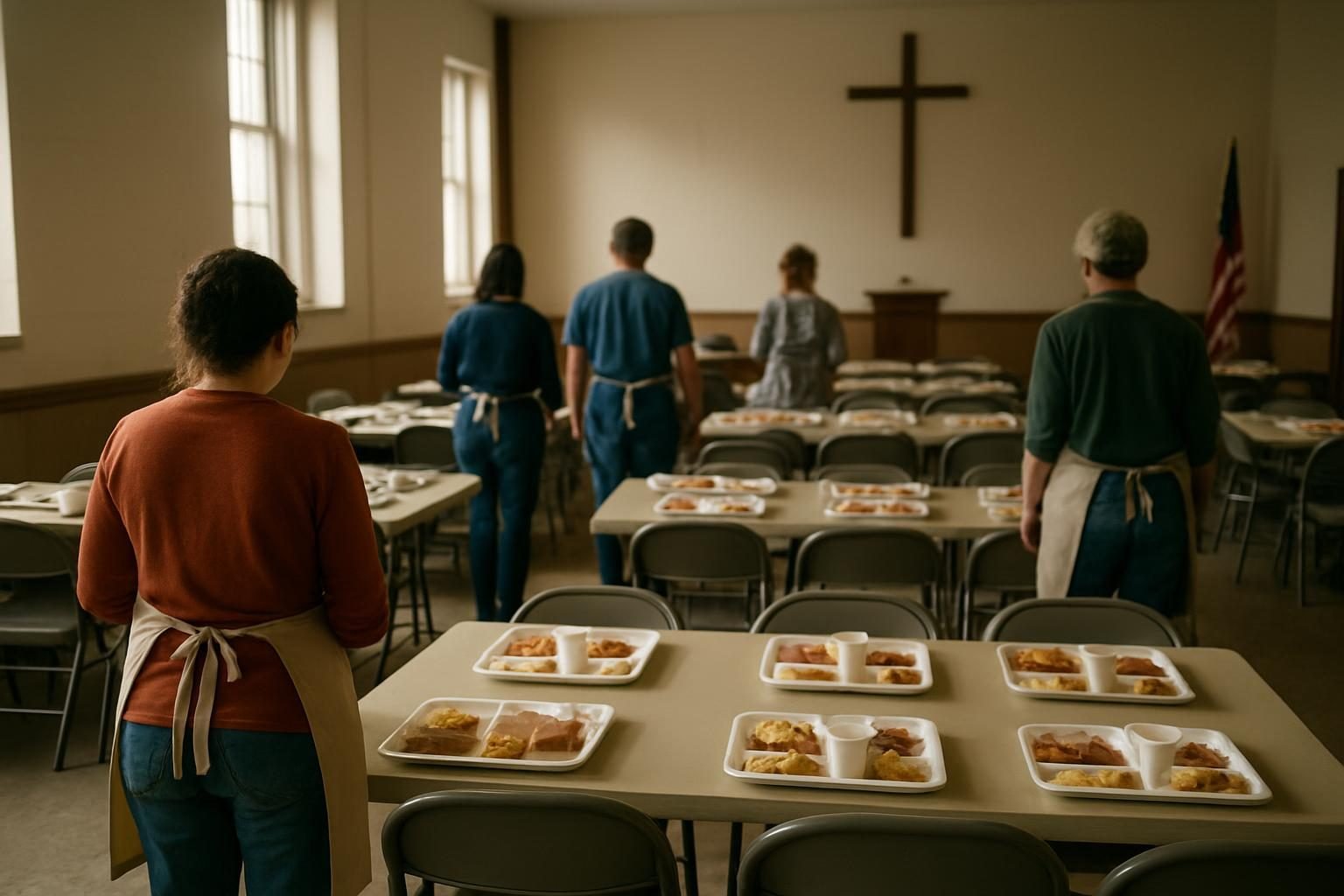
The Free Breakfast for Children program began in Oakland in 1968 at a church and spread to many cities. Volunteers cooked and served meals to children before school, often relying on donations from local grocers and supporters. Commonly cited estimates say the program fed tens of thousands of children over the years, though precise figures are hard to verify.
Why does it matter? In 1966, Congress had created a federal school breakfast pilot program, and it was made permanent in 1975. Some historians argue the Panthers’ high-profile effort added pressure for expansion. Others caution that the connection is hard to prove, since many forces shaped that policy. Both points are fair. What is clear is that the idea of school meals was gaining ground at the same time, and the Panthers were part of that public conversation.
Health clinics and other services
The party also opened free health clinics in several cities. These offered basic screenings and care, and became known for work on sickle cell anemia testing at a time when the disease received little national attention. Other programs included clothing drives, legal aid, transportation help for families visiting prisoners, and community newspapers.
Quality and consistency varied from chapter to chapter. Some programs were well run and some were short-lived or stretched thin. The services also had a political purpose: they were meant to build loyalty and demonstrate what community control could look like.
Controversies and Criticisms
A fair history cannot stop at the breakfast tables. The party’s record includes serious, documented controversies, and some of its sharpest critics were former members.
- Armed rhetoric and confrontations. Several deadly encounters with police involved Panthers, including a shootout in Oakland in 1967 in which a police officer died and Huey Newton was wounded and later convicted of voluntary manslaughter (the conviction was later overturned on appeal). Police also killed Panthers in other cities.
- Crime and internal violence. Some members and leaders were involved in criminal activity. Internal disputes sometimes turned violent, and former members have described intimidation and abuse within parts of the organization.
- Leadership disputes. Rifts between leaders, including a bitter split between Newton and Eldridge Cleaver, weakened the party. Later in the 1970s, the party focused more on local electoral politics, including Bobby Seale’s 1973 run for mayor of Oakland, which he lost.
- Ideology. The party drew on Marxist ideas and revolutionary language, which alarmed many Americans during the Cold War. Others saw this as a sincere critique of economic inequality.
Defenders point out that the party formed amid real police abuse and unequal enforcement, and that young activists responded in ways shaped by that environment. Critics respond that armed confrontation put lives at risk, including in Black communities, and undercut the party’s own goals. A thoughtful reader can take both arguments seriously. For more on how policing evolved, see our upcoming history of policing in America.
COINTELPRO: The Government’s Response
The federal response is among the best-documented parts of the story. COINTELPRO, short for Counterintelligence Program, was a series of secret FBI operations that began in the 1950s, first aimed at the Communist Party and later at groups ranging from the Ku Klux Klan to civil rights organizations and New Left groups. Learn more in our upcoming explainer, What Was COINTELPRO?
In 1968, FBI Director J. Edgar Hoover reportedly called the Panthers a leading internal security threat. The Bureau expanded efforts against the party, using methods that investigators later documented:
- Surveillance and the use of informants inside chapters.
- Forged or anonymous letters designed to create suspicion and rivalry among members and between groups.
- Coordination with local police, including raids on Panther offices and homes.
- Efforts to damage reputations and discourage funding or community support.
The best-known case is the December 1969 raid in Chicago that killed Fred Hampton, a young Illinois Panther leader, and Mark Clark. Police fired many shots, and the evidence later raised serious questions about the official account. A civil lawsuit ended in a settlement in the 1980s. An FBI informant had supplied information about the apartment layout beforehand.
In the mid-1970s, a Senate committee led by Frank Church investigated intelligence abuses and publicly documented COINTELPRO’s methods, concluding that many were improper and sometimes unlawful. This led to new oversight rules for intelligence agencies. For how such checks are meant to work, see our guide to separation of powers.
Even groups that break rules deserve a government that follows them; the record shows what happens when both sides stop.
Where reasonable people differ
Historians agree that COINTELPRO happened and that it targeted the Panthers. They disagree on how much it caused the party’s decline compared with internal conflicts, leadership choices and the party’s own rhetoric and actions. Some emphasize the government’s role, while others stress that the party’s own decisions contributed. Most scholars see multiple causes, not one.
Decline and Legacy
By the early 1970s the party was shrinking. Arrests, deaths, trials and splits drained its leadership. By the mid-1970s, it concentrated on Oakland, and it dissolved in the early 1980s.
Its legacy is still debated:
- Community organizing. Free meal and health programs became models cited by later activists and some public health advocates.
- Policing debates. Many current conversations about police accountability echo themes the Panthers raised, a connection explored in our upcoming history of the war on drugs and its effects on neighborhoods.
- Political memory. Depending on the audience, the party is remembered as heroic, dangerous or tragic. Much of that comes from how the media of the day framed it, a theme we explore in our media literacy guide.
- Black political power. Some former Panthers went on to hold elected office or work in education and community service, as part of a broader wave of Black political participation.
For context on how housing, jobs and public policy shaped the neighborhoods the party served, see how policy shaped wealth in America. And for the broader movement the Panthers both joined and challenged, our upcoming civil rights movement timeline fills in the picture.
Think about it: A group can run a children’s breakfast program and also stand accused of violence. How should we weigh both parts of a story when we judge a historical movement? Does the answer change if the government’s tactics were also unlawful?
Key takeaways
- The Black Panther Party was founded in Oakland in 1966, in response to police conduct and persistent inequality that civil rights laws had not fixed.
- Its Ten-Point Program mixed mainstream goals (schools, housing, fair policing) with more radical demands.
- Free breakfasts and health clinics were central to its community impact, though quality varied by chapter.
- The party also had documented violence, internal conflict and criminal activity that harmed its mission.
- COINTELPRO was a real, documented FBI campaign against the party, later criticized by a Senate committee.
- Historians disagree on how much each factor, government action or internal problems, caused its decline.
Want to keep exploring? Our History & Context section collects related articles, and our reading list by theme points to books by historians and former participants. If this topic comes up at the dinner table, our guide on talking about politics with family can help.
Frequently asked questions
When was the Black Panther Party founded?
Huey P. Newton and Bobby Seale founded it in Oakland, California, in October 1966. It began as the Black Panther Party for Self-Defense, and the group later dropped the words “for Self-Defense” from its name.
What was the Ten-Point Program?
It was the party’s platform, a list of demands and beliefs covering freedom, employment, housing, education, military service, policing, the justice system and what it called peace. It echoed language from the Declaration of Independence and combined civil rights goals with more radical ones.
Did the Black Panther Party use violence?
Historians generally say yes and no. The party openly carried firearms and some members were involved in shootouts and criminal acts, while its community programs were nonviolent. How much weight each piece deserves is still debated, as is how much the party’s rhetoric and the government’s response fed each other.
What was COINTELPRO and how did it affect the Panthers?
COINTELPRO was a set of secret FBI counterintelligence programs, started in the 1950s, that targeted groups the Bureau considered subversive. Its tactics against the Panthers included surveillance, informants, forged letters and efforts to deepen divisions. The Senate’s Church Committee later documented and criticized these operations.
Why did the Black Panther Party decline?
Several forces combined: government infiltration and disruption, deadly confrontations with police, internal splits and leadership disputes, and legal troubles. By the mid-1970s the party was much smaller, and it effectively ended in the early 1980s.