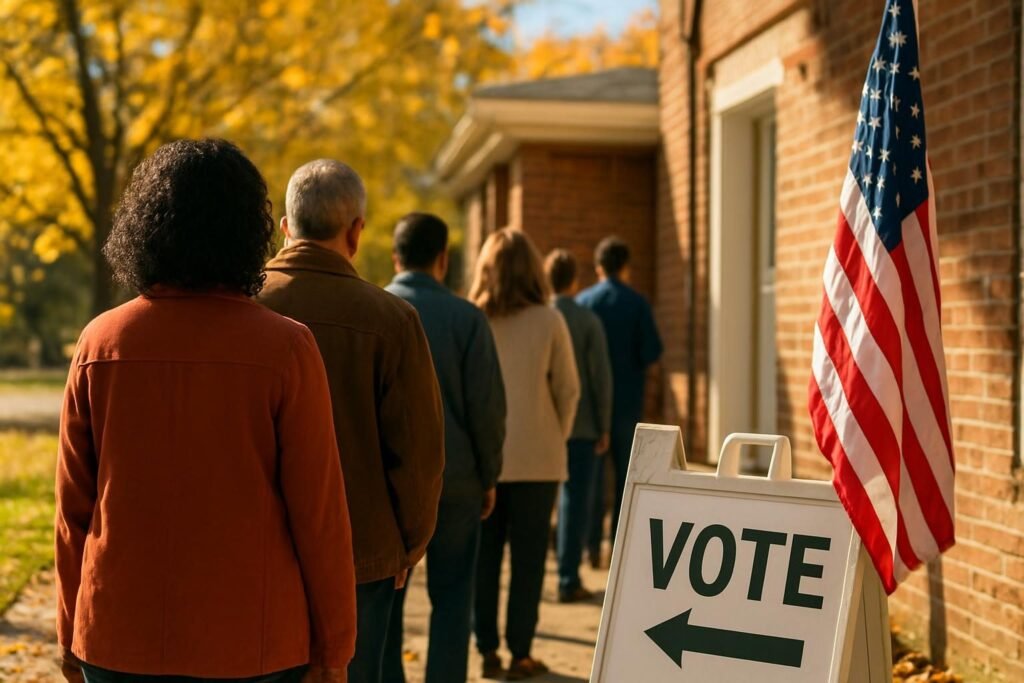
Every American election rests on a question most of us never think about: who gets to take part? The answer has changed dramatically since 1789, and the changes did not come easily or in a straight line.
This guide walks through the history of voting rights in America, from a small electorate at the founding to the broad, still-debated system we have now. The goal is not to tell you what to think about today’s arguments, but to show you where they came from.
Quick answer: At the founding, the Constitution left voting rules to the states, and most states limited the vote to white male property owners. Over two centuries, constitutional amendments and federal laws barred discrimination by race, sex, and age, but practical barriers like poll taxes, literacy tests, and intimidation kept many citizens from voting until the civil rights era. The 1965 Voting Rights Act was a turning point, and the rules continue to be argued over today.
The founding era: a small electorate, state by state
The Constitution says who can serve in Congress and how electors are chosen, but it largely leaves the question of who may vote to the states. That choice reflects the federal structure the framers built, which you can read more about in our guide to how state and federal power work.
In practice, most states limited voting to white men who owned property or paid certain taxes. The reasoning, as many founders argued, was that property gave a person an independent stake in the community. Critics then and now point out that this left out most of the population.
There were exceptions. A few places allowed some free Black men or, briefly, some women to vote, but these were uneven and often rolled back. The overall picture was a narrow electorate, with the vote treated as a privilege rather than a right.
Expanding the franchise for white men
In the early 1800s, many states dropped property requirements for white men. Historians often connect this to the growth of new states in the West, the rise of mass political parties, and a changing sense of what citizenship meant. By the mid-1800s, most white men could vote regardless of wealth.
At the same time, some states added racial restrictions, writing “white” into their voting laws and shutting out free Black men who had previously been able to vote. This pattern of narrowing the electorate for some even as it widened for others would resurface in later eras, such as the Southern Strategy of the modern political era.
This is a good example of a pattern that repeats throughout this story: rules for voting are rarely neutral. They are shaped by who holds power and who stands to gain or lose from a bigger electorate.
Rules about who may vote have rarely been neutral; they reflect who holds power and who could lose it.
Reconstruction and the 15th Amendment
The Civil War and the end of slavery forced a new question: what rights would formerly enslaved people hold? Three constitutional amendments answered it on paper. The 13th ended slavery, the 14th defined citizenship and promised equal protection, and the 15th, ratified in 1870, said the right to vote could not be denied “on account of race, color, or previous condition of servitude.”
For a short period, Black men in the South voted in large numbers and were elected to local, state, and federal offices. That era, and the violent backlash against it, is explored in What Was Reconstruction and Why Did It End?
The 15th Amendment banned discrimination on the basis of race, but it did not guarantee a positive right to vote, and it said nothing about sex. Those gaps mattered a great deal in the decades that followed.
The long retreat: Jim Crow and the barriers to the ballot
After Reconstruction ended in 1877, Southern states built systems designed to remove Black voters without naming race. Historians have documented a toolkit that included:
- Poll taxes: a fee to vote, which fell hardest on the poor.
- Literacy and “understanding” tests: often judged by local officials who could pass or fail applicants at will.
- Grandfather clauses: exemptions for people whose ancestors had voted before the Civil War, which shielded white voters from the same tests.
- White primaries: party contests that excluded Black voters, which mattered because one party dominated the region.
- Intimidation and violence: threats, economic retaliation, and, in documented cases, lynching.
These measures worked. Black voter participation in much of the South fell sharply and stayed low for generations. This was part of the wider system described in What Were Jim Crow Laws?, which covered segregation in schools, transportation, and public life as well.
These laws also swept up many poor white voters, which is one reason some historians describe them as reshaping the whole electorate of the region, not just one group within it.
Women win the vote
The movement for women’s suffrage stretched across much of the 19th century. It grew out of the same reform energy that fueled abolition, and it often split over strategy, including whether to pursue state-by-state change or a federal amendment.
Some western states granted women the vote earlier than the rest of the country. The 19th Amendment, ratified in 1920, barred denying the vote on account of sex nationwide.
Like the 15th Amendment, it was not the end of the story. Many Black women in the South, as well as other women of color, still faced the same barriers as Black men for decades afterward.
Native Americans and Asian Americans
Citizenship and voting were also tangled together for other groups. Congress granted citizenship to Native Americans in 1924, but states controlled voting, and some did not fully allow Native Americans to vote until the mid-20th century. Laws also limited naturalization for many Asian immigrants for decades, which kept them from voting; those restrictions were lifted in stages in the 1940s and 1950s.
Winning a right on paper and being able to use it in practice have often been two very different victories.

The civil rights era and the Voting Rights Act
By the mid-1900s, activists were organizing voter registration drives, marches, and legal challenges across the South, often at great personal risk. The broader story of those years is told in our timeline of the civil rights movement.
Several milestones from this period reshaped the rules:
| Change | Year | What it did |
|---|---|---|
| 15th Amendment | 1870 | Barred denying the vote because of race |
| 19th Amendment | 1920 | Barred denying the vote because of sex |
| Indian Citizenship Act | 1924 | Granted citizenship to Native Americans |
| 24th Amendment | 1964 | Banned poll taxes in federal elections |
| Voting Rights Act | 1965 | Targeted discriminatory practices; added federal oversight |
| 26th Amendment | 1971 | Lowered the voting age to 18 |
The Voting Rights Act of 1965 is often described as one of the most consequential civil rights laws in American history. It outlawed practices like literacy tests in many areas and required places with a history of discrimination to get federal approval before changing their election rules. Black voter registration in the South rose substantially in the years that followed.
Later amendments and laws added to the framework. In 1971, the 26th Amendment lowered the voting age to 18, a change often linked to the argument that those old enough to be drafted should be old enough to vote.
For a sense of how Congress turns demands like these into law, see How Does a Bill Become a Law?
Voting rights today: where people disagree
The legal landscape has kept shifting. Courts have interpreted and, in some cases, narrowed parts of the Voting Rights Act, and Congress and the states have passed new election laws. Because details change, check official sources like your state election office or the U.S. Department of Justice for the rules that apply to you now. Our explainer on what the Supreme Court does shows how court decisions fit into this picture.
Today’s debates tend to center on a few themes, and each side has a serious case.
Access versus security
One view stresses that every eligible citizen should be able to vote easily, and that rules like strict identification requirements, limits on early or mail voting, or reduced polling places can create barriers that fall unevenly. Supporters of this view point to the history above as a reason for caution about any new hurdle.
The other view stresses that public trust depends on clear, consistently applied rules, and that measures like voter identification, list maintenance, and ballot-handling safeguards help ensure that only eligible people vote and that results are believed. Supporters note that many other democracies use such tools.
The evidence on specific policies is mixed and depends on details, such as how a rule is written and how it is administered. It’s worth asking for data on a particular proposal rather than judging by its label.
Who draws the lines
Another recurring argument is about how electoral districts are drawn and whether that process gives voters or mapmakers more influence. We cover that in What Is Gerrymandering? And because presidents are chosen indirectly, the way votes are counted raises its own questions, explored in How Does the Electoral College Work?
The question of who is included
There are also long-running disagreements about voting by people who have completed criminal sentences, voting by those in U.S. territories, and voting rules for citizens living abroad. These are questions of both law and values, and states handle them differently.

What this history teaches us
A few patterns stand out. The vote has expanded over time, but rarely without a struggle, and often only after sustained pressure from ordinary people. Gains have also been reversible when attention or enforcement faded.
Another lesson is that rights on paper depend on how they are carried out. A law that bans discrimination means little if local officials can apply it selectively, which is why enforcement has been as important as the text of any amendment.
Finally, the history reminds us that arguments about elections are often arguments about power. Whoever can vote influences who governs, which is one reason these debates stay intense. For a wider look at that dynamic, see Who Has Power in America?
If you want to go deeper, our guide to American history that explains today and the rest of the History & Context section connect this story to others, from housing to criminal justice.
Key takeaways
- The Constitution left voting rules mostly to the states, and early electorates were small and mostly white, male, and property-owning.
- Amendments in 1870, 1920, and 1971 barred discrimination by race, sex, and age, but they did not automatically make voting accessible in practice.
- Poll taxes, literacy tests, and intimidation kept many citizens from voting for generations, especially Black Americans in the South.
- The Voting Rights Act of 1965 was a major turning point, though courts and Congress have since changed parts of it.
- Today’s debates weigh real values on both sides, including broad access and public confidence in the process.
- Check current official sources for the voting rules where you live, since they change.
Think about it: Why do you think the right to vote has so often been won, lost, and won again, rather than settled once and for all? When you hear a new proposal about elections, what questions would you want answered before deciding whether it expands or limits participation, and does it protect public trust at the same time?
Frequently asked questions
When did all American adults get the right to vote?
There was no single moment. Constitutional amendments and federal laws expanded the vote in stages: Black men in 1870 (on paper), women in 1920, Native Americans through a 1924 law, and 18-year-olds in 1971. Practical barriers kept many people from voting long after those dates, which is why the 1965 Voting Rights Act mattered so much.
Did the Constitution originally guarantee a right to vote?
No. The original Constitution left most voting rules to the states, which is why early voting requirements varied widely. Later amendments barred specific kinds of discrimination, such as by race, sex, or age (for those 18 and older), but the Constitution still does not contain a general, affirmative right to vote.
What was the Voting Rights Act of 1965?
It was a federal law that targeted the practices used to keep Black Americans from voting, especially in the South. It banned literacy tests in affected areas and gave the federal government tools to oversee election changes in places with a history of discrimination. Some provisions have since been changed by court rulings and later laws, so check current official sources for what applies today.
Why were poll taxes and literacy tests used?
After the 15th Amendment banned denying the vote because of race, some states turned to rules that did not mention race but were applied unevenly. Poll taxes charged a fee to vote, and literacy tests were often graded at the discretion of local officials. Historians document that these tools were used to exclude Black voters, and also kept many poor white voters away.
Are voting rights still debated today?
Yes. Americans disagree about how to balance easy access to the ballot with election security, and about how much authority states versus the federal government should have. Both sides cite real values: broad participation on one hand, public confidence in the process on the other. Evidence on specific policies varies, so it helps to look at the data for each one.