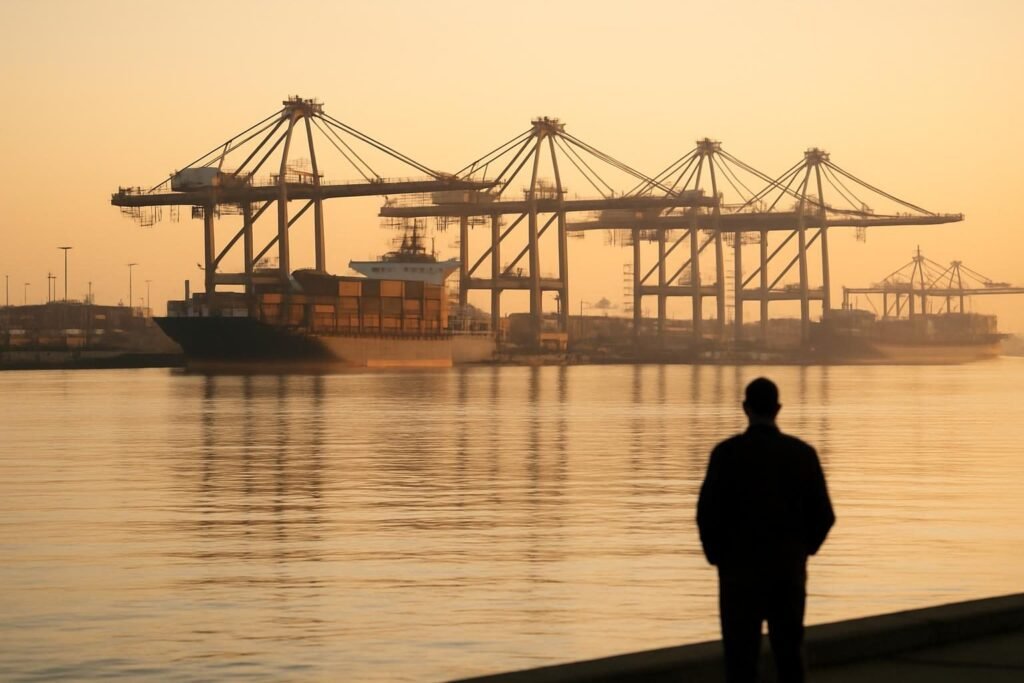
What if the cheap goods on your store shelves, the food on your table and the fuel in your car all depend on a world order that is quietly coming apart? That is the unsettling premise of Peter Zeihan’s The End of the World Is Just the Beginning. This end of the world is just the beginning summary walks through the book’s big ideas, what supporters admire, what critics push back on, and why it matters for ordinary Americans.
Quick answer: Peter Zeihan argues that the U.S.-guarded global trading system built after World War II is ending, and that aging populations will make the unraveling harder to avoid. He predicts a more regional, more fragile world in which geography, energy and food matter more than ever, and where North America is relatively well placed. Supporters see a useful wake-up call; critics see overconfident forecasting.
Who Is Peter Zeihan, and Why Did He Write This Book?
Peter Zeihan is an American geopolitical analyst. He spent years at Stratfor, a private intelligence and forecasting firm, before starting his own consulting business and becoming a popular speaker. Geopolitics, a term we will use often, simply means the study of how geography, resources and population shape the power and choices of nations.
The book was published in 2022. It follows his earlier works, including The Accidental Superpower and The Absent Superpower. Those books argued that the United States benefits from unusual geography and was reducing its own role abroad.
This one pulls the threads together into a broader warning. It arrived at a moment when pandemic shortages, a war in Europe and tense relations with China had many people asking whether global supply chains were as sturdy as they seemed.
The Central Argument in Plain Language
Here is the argument in a few sentences. After World War II, the United States used its navy to keep the world’s sea lanes open and safe for everyone, including its rivals. That security let countries specialize, trade freely and build long supply chains that crisscross oceans. This global order, like the economic systems built on slavery and capitalism, rested on foundations many now question.
Zeihan argues that two forces are now ending that arrangement. First, the United States has less reason to keep paying for global security. Second, many of the world’s major economies are aging fast, which means fewer workers, fewer consumers and less capacity to keep the system running.
His conclusion is that the world will fragment into smaller, more regional blocs, with serious shortages, higher costs and disruption along the way. He does not claim humanity ends. His point is that one era ends, and what follows will look very different.
Cheap, easy trade was never a law of nature. It was a security arrangement, and arrangements can change.

The Key Ideas in the Book
1. The postwar order was a security deal
The book’s foundation is that globalization did not just happen because markets are efficient. It rested on American naval power, which let ships travel almost anywhere without fear of attack. Countries joined this system in part because their trade routes were protected.
If that protection weakens, Zeihan says, the economic logic of far-flung supply chains weakens too. This is an interpretation, but it is one many historians of trade would at least recognize.
2. Demographics are destiny, or close to it
Demographics means the age and size of a population. Zeihan puts enormous weight on it. A country with many young adults can produce, consume and borrow. A country with mostly older people spends more on care and has fewer workers to pay for it.
He points to rapid aging in places like China, Japan and much of Europe as a force that will strain their economies and limit their global reach. Demographers broadly agree that aging is real and well documented; the debate is about how severe the consequences will be.
3. Supply chains are more fragile than we think
A supply chain is the network of makers and shippers that turns raw materials into a finished product. Modern products, from phones to medicines, may involve many countries, each providing one small piece.
Zeihan argues that this efficiency came with hidden brittleness. If one link fails, whether from war, a pandemic or a closed port, the whole chain can stall. The shortages of the early 2020s are his favorite illustration of how quickly that can happen.
4. Energy is the foundation of everything
The book treats energy as the hidden base of the modern economy. Oil, natural gas and electricity power factories, farms, trucks and homes. Countries that produce their own energy, or can get it safely from neighbors, have an enormous advantage.
He argues that North America’s energy resources make it unusually secure compared with energy importers in Europe and East Asia. Energy experts add nuance, noting that markets for oil and gas are global and prices ripple everywhere.
5. Food and fertilizer link directly to survival
Zeihan highlights how much of the world’s food supply depends on a handful of exporting regions and on fertilizer made with natural gas and minerals mined in a few places. Disrupt those inputs, he says, and crop yields can fall in countries that cannot easily replace them.
This idea connects abstract geopolitics to a plain human question: who eats if trade breaks down? It is one of the most concrete and, for many readers, most sobering parts of the book.
6. Manufacturing and finance will regionalize
Rather than one global economy, Zeihan expects clusters of countries trading mainly with nearby partners. North America, in his view, is the best-positioned cluster because it has food, energy, a large domestic market, and friendly neighbors.
Other regions, particularly those dependent on imports of food or fuel, he sees as more exposed. This is the most forecast-heavy part of the book, and where critics push hardest.
7. Geography still rules
Underneath everything is an old idea: geography shapes history. Rivers, mountains, coastlines and farmland help determine which countries become rich, which stay secure and which stay vulnerable.
Zeihan argues that technology and trade papered over geography for decades, but that its influence is returning. Readers who enjoy this thread may also like our plain guide to American history that explains today, which shows how geography and policy have shaped the country’s path.
A Quick Look at the Argument’s Moving Parts
| Force | What Zeihan says | What to ask |
|---|---|---|
| Security | U.S. protection of sea lanes is fading | Will the U.S. truly step back, or just reshape its role? |
| Demographics | Aging populations will weaken major economies | Can technology and policy offset fewer workers? |
| Energy | Energy producers gain, importers struggle | How fast can energy supplies and markets adapt? |
| Food | Fertilizer and grain disruptions threaten stability | How resilient are farms and trade networks? |
| Regionalization | Trade shifts to nearby partners | Will global trade shrink or just reroute? |

What Supporters Say the Book Gets Right
Admirers credit the book with making invisible systems visible. Most of us never think about how a shirt, a battery or a bag of rice reaches us. Zeihan makes that journey vivid, and the pandemic shortages gave his warnings fresh credibility.
Supporters also say he takes demographics seriously when many commentators ignore them. Falling birth rates and aging societies are well-documented trends, and the book forces readers to consider what they mean for growth, defense and public budgets.
Finally, fans appreciate his plain, energetic style. He turns dense subjects like shipping lanes, fertilizer chemistry and population pyramids into a gripping story, which brings more people into conversations usually left to specialists.
The Main Critiques, Stated Fairly
Critics, including economists, regional specialists and reviewers from different perspectives, raise several recurring concerns. Taking them seriously is part of reading the book well.
- Overconfidence. Forecasting the future of complex systems is notoriously hard. Critics argue the book states bold predictions with more certainty than the evidence supports, leaving little room for adaptation.
- Underestimating adaptation. Economists often note that businesses and governments respond to shocks by finding substitutes, building new capacity and changing policy. Supply chains have rerouted before, and critics say the book underplays this flexibility.
- Specific predictions about countries. Some regional experts challenge the book’s treatment of particular nations, arguing it simplifies local politics, cultures and economies, or relies too heavily on a few variables.
- Technology and productivity. Automation, new energy sources and improved farming could soften some of the demographic and resource pressures the book emphasizes.
- Tone and framing. Some reviewers find the style more provocative than precise, mixing hard data with sweeping claims and humor that can blur the line between analysis and opinion.
A fair reading is that the book is strongest on trends already documented, like aging and supply fragility, and weakest on the timing and certainty of its forecasts. It is best treated as a thought-provoking argument rather than a prophecy.
A forecast is a map of one possible future. The wise reader checks it against the terrain.

How the Book Connects to American Systems and Incentives Today
The book is a good lens for understanding why American policy debates look the way they do. Questions about military spending, trade deals, energy production, factory jobs and immigration all connect to the forces Zeihan describes, even if people disagree about the answers.
Consider incentives. Companies chase low costs, which pushed production overseas for decades. Governments chase security and jobs, which is now pushing some of it back. Voters want cheap goods and stable communities at the same time, and those goals can pull in opposite directions.
These choices are made through institutions. Congress controls trade policy and spending, the executive branch conducts diplomacy and defense, and states and cities shape energy, zoning and workforce policy. Our guide on how the U.S. government works explains who decides what, and who has power in America looks at how incentives steer those decisions.
Economic questions run through the book too, from wages to housing to regional inequality. For background on how past policy shaped who prospered, see how policy shaped wealth in America. And because the book is so media-friendly, it is worth practicing the skills in our media literacy guide when you encounter confident predictions about the future.
For a systems-thinking companion, you might later explore our summary of Thinking in Systems, which offers tools for understanding how complex networks behave under stress.
Who Should Read It, and What to Pair It With
This book suits readers who like big-picture thinking about economics, security and the future. It is especially useful for anyone curious about supply chains, energy, food or demographic change, and for readers who want a punchy introduction before diving into denser academic works.
It is less suited to readers who want careful hedging or deep country-by-country scholarship. Read it as a provocative starting point, then test its claims against other sources.
Good pairings include:
- A systems book for thinking about fragility and feedback, such as Thinking in Systems.
- A book on power and survival like The Dictator’s Handbook, which explains how leaders stay in power.
- A book on how plans meet reality such as Seeing Like a State, a useful check on confident grand predictions.
- A media-focused read like our Amusing Ourselves to Death summary, which asks how format shapes the way we absorb big, alarming ideas.
More options live in our reading list by theme and the Books & Big Ideas category.
Think about it: Questions for a reading group
- Zeihan treats the global trading system as a security arrangement rather than a natural market outcome. Does that change how you think about the goods you buy?
- Which of the book’s forces, demographics, energy, food or security, feels most convincing to you, and which feels most uncertain? Why?
- How much should we trust confident forecasts about the future? What would make a prediction more or less believable?
- If supply chains do become more regional, who in your community might gain and who might lose? How should those tradeoffs be weighed?
- Can people with very different politics agree on the facts in this book while disagreeing on what to do about them?
Key takeaways
- Zeihan argues that global trade depended on U.S.-backed security, and that this arrangement is eroding.
- Aging populations, energy and food are the book’s main pressure points.
- Supporters value its clear, vivid look at hidden supply chains and demographic trends.
- Critics warn that its forecasts are overconfident and underestimate adaptation and technology.
- The book is best used as a provocative lens, not a prophecy, and checked against other sources.
- Many of its themes connect to everyday American debates over trade, energy, defense and jobs.
Frequently asked questions
Who wrote The End of the World Is Just the Beginning?
Peter Zeihan, a geopolitical analyst who worked in the private intelligence firm Stratfor before founding his own consultancy. The book was published in 2022 and builds on his earlier work, including The Accidental Superpower and The Absent Superpower.
What is the main argument of the book?
Zeihan argues that the postwar global trading order, kept safe by the U.S. Navy, is fading. As aging populations and weaker security guarantees break up global supply chains, he expects a more regional, more fragile world, with North America better positioned than most.
What is deglobalization?
Deglobalization means the weakening of the worldwide system of trade, finance and shipping built after World War II. Instead of goods and capital moving easily across oceans, countries rely more on nearby partners or their own production.
Do experts agree with Zeihan’s predictions?
Not fully. Many analysts accept his points about demographic aging and supply-chain fragility, while criticizing his confidence, his tendency toward sweeping forecasts, and some specific predictions that have been challenged by economists and regional specialists.
Is the book political or partisan?
It is mainly about geography, demographics, energy and trade rather than party politics. Readers across the spectrum can find claims they like and dislike, since it touches on defense, immigration, energy and industrial policy.