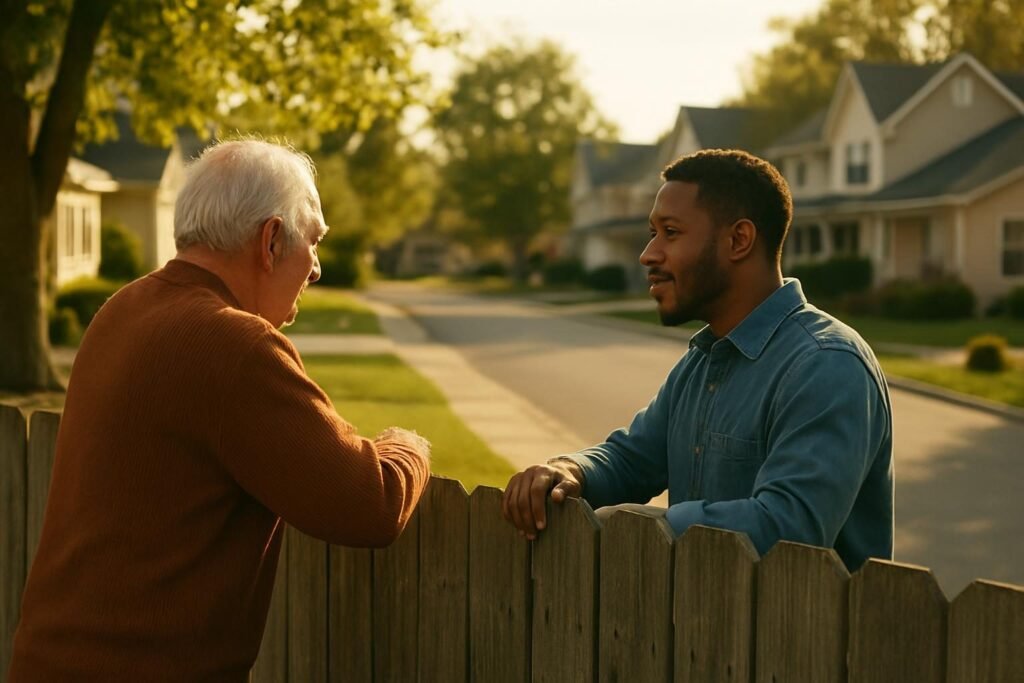
Picture the typical voter on the other side of the political divide. Chances are the person you imagined is angrier, more rigid and more extreme than most real people on that side. That mismatch has a name, and understanding it may be one of the most useful things you can do for your own peace of mind.
Quick answer: The perception gap in politics is the difference between what we think the other side believes and what they actually say they believe. Research over the past several years has repeatedly found that Americans on both sides tend to overestimate how extreme their opponents are. The gap is driven by media incentives, social media, and ordinary quirks of human thinking, and it can be narrowed through conversation, better information habits, and curiosity.
What is the perception gap?
The perception gap is the distance between two things: the picture in your head of “what people on the other side think,” and what those people would tell you if you asked them. Researchers who study political attitudes have measured this by asking people to predict the views of the other party, then comparing those predictions with how the other party actually answers.
The pattern is consistent enough to be widely discussed: people tend to guess that the other side is more extreme, more hostile and more unified than it really is. This is sometimes described as “false polarization,” meaning we perceive more division than the data supports.
Two quick clarifications. First, this is not a claim that disagreements are imaginary. Americans differ on real questions about taxes, borders, health care, guns, education and the role of government. Second, it is not a story about one party being foolish. Misperceptions show up on the left and the right, and the exact size varies by study, so treat any single number you see with caution.
Facts, interpretations, and values
It helps to separate three layers of any political disagreement. They get tangled together constantly, and the perception gap lives in the tangle.
| Layer | What it is | Example |
|---|---|---|
| Facts | Things that can be checked against evidence | How much a program costs, or what a law says |
| Interpretations | Reasonable readings of the facts, which can differ | Whether a policy is working well enough |
| Values | What we care about most when goals conflict | How to weigh liberty against security, or fairness against efficiency |
The perception gap mostly shows up in the third column. We assume the other side has bad values when they may simply weigh good values differently. Someone who prioritizes order and someone who prioritizes liberty are both valuing something real, even if they land in different places.
We often mistake a different ranking of good values for the absence of good values.

Why do we imagine the other side as more extreme?
No single villain creates the gap. It emerges from several systems that each make sense on their own terms but add up to a distorted picture. This is the kind of incentive-driven pattern we look at throughout our guide to who has power in America and the incentives behind it.
1. The loudest voices travel farthest
Extreme statements are vivid, surprising and shareable. Moderate ones are not. A thoughtful, mixed-feelings opinion rarely goes viral, while an outrageous one can reach millions in a day. So the version of “the other side” that reaches you is often a sample picked for its intensity.
Most people also post and comment far less than the most committed few. Studies of online behavior have often found that a small share of users produces a large share of political content. That means a feed can feel like a window into the other side when it is really a window into its most active corner.
2. News has a business model
Attention is the product that many media outlets sell. Conflict, outrage and fear hold attention better than nuance does. This does not require anyone to lie. It only requires that the stories that get clicks and views are the ones that get produced and promoted. For a deeper look at how this works, see our media literacy guide on how news shapes what you believe.
3. We rarely meet people who disagree with us
Many Americans live in neighborhoods, workplaces and friend groups where most people share their politics. Many also avoid political talk with the people who do not. When we only hear the other side described by people on our own side, we hear a summary written by opponents, not a self-portrait.
4. Our minds love shortcuts
Psychologists describe a habit sometimes called the availability shortcut: whatever examples come to mind most easily feel most typical. If the most memorable image of the other side is a furious stranger in a viral clip, that image quietly becomes the average. We also tend to see our own side as made of varied individuals and the other side as one uniform bloc.
How big is the gap?
Estimates differ by survey, topic and year, so it is wiser to describe the pattern than to quote a single figure. Broadly, studies have found that when people are asked how many members of the other party hold extreme or hostile views, their guesses tend to run well above what members of that party report about themselves. In some surveys, the guesses have been roughly double the real share, though this varies and should be treated as approximate.
Another recurring finding is that people who consume the most political news are not always the most accurate about the other side. Following politics closely can sharpen your knowledge of your own side’s arguments while leaving the other side’s views blurry or caricatured.
That does not mean the other side has no extreme members. Every large group does. The point is that the extremes are a smaller share than we assume, and they are not a good guide to what most people in that group want.
The most extreme members of any group are the easiest to notice and the least typical to meet.

What the gap does to us
A distorted picture of the other side has practical consequences, even if every individual involved is acting in good faith.
- It raises the temperature. If you believe the other side is dangerous or hateful, ordinary disagreements start to feel like emergencies.
- It discourages conversation. Why talk to someone you assume cannot be reasoned with? So the assumptions go untested.
- It rewards extremes. If voters expect the worst from the other side, they may feel pushed to support whoever fights hardest, rather than whoever listens best.
- It feeds affective polarization. This is the growing dislike and distrust people feel toward the opposing party, apart from any specific policy disagreement.
It also takes a personal toll. Constantly picturing a menacing opposition is exhausting, and many people find it feeds stress about public life. If that sounds familiar, our planned piece on staying engaged without losing your peace speaks to it directly.
Where Americans are closer than they think
Beneath the noise, surveys regularly find real common ground on many everyday questions: wanting safe neighborhoods, decent schools, working roads, honest elections and a fair shot for hard workers. People differ on how to get there, and those disagreements are real, but the goals overlap more than the shouting suggests. We explore this in depth in What Do Americans Agree On? More Than You Think.
History offers a useful reminder as well. Americans have disagreed fiercely since the founding, and the country has also repeatedly built compromise out of that conflict. The Constitution itself was a negotiated bargain among people with deep disagreements. For that longer view, see our plain guide to American history that explains today.

How to close your own perception gap
You cannot fix the media ecosystem alone, but you can change how you take in information and how you talk to people. Here are practical steps, roughly from easiest to hardest.
- Check your sources of “the other side.” Where does your picture come from? If it comes mostly from your own side’s commentary or from viral clips, you are seeing a filtered version.
- Ask before you assume. Try a real question: “What matters most to you about this issue?” Then listen for reasons, not just conclusions.
- Practice steelmanning. State the other side’s argument so well that they would say, “Yes, that’s what I mean.” Our explainer on what steelmanning is shows how.
- Talk to real people. One conversation with an actual person is often more corrective than hours of reading about a group. Our guides on having a civil conversation across the divide and talking about politics with family offer practical starting points.
- Do something together that is not politics. Shared work, such as local volunteering or a neighborhood project, lets people see each other as neighbors first. Our starter guide to getting involved in your community is a good place to begin.
Think about it: Think of a belief you hold about “the other side.” Where did you first learn it, and have you ever tested it by asking someone who actually belongs to that group? What would change if the real person turned out to be more complicated than the picture?
A fair caution
It would be a mistake to take the wrong lesson from all this. The perception gap does not mean that disagreements are small, that every position is equally supported by evidence, or that the two sides are interchangeable. Some factual claims are simply better supported than others, and some disputes involve real stakes and real conflicts of interest.
The lesson is narrower and more useful: before you decide what someone believes, find out what they actually believe. Argue with the real position, not the cartoon. You can still disagree strongly, and in fact you will disagree better.
If you want to go further, our reading list by theme includes books that help make sense of the country’s divides, and our Bridging the Divide section collects more guides like this one.
Key takeaways
- The perception gap is the difference between what we think the other side believes and what they say they believe, and it runs in both directions.
- Media incentives, social media, limited cross-party contact and mental shortcuts all push us toward imagining the other side as more extreme.
- Real disagreements remain, but we often misjudge their size and mistake different value rankings for bad values.
- Closing the gap does not require agreeing, only checking assumptions against real people and better sources.
- Small steps like asking real questions, steelmanning and shared community work can make the other side feel human again.
Frequently asked questions
What is the perception gap in politics?
The perception gap is the distance between what people believe the other political side thinks and what that side actually says it thinks. Surveys over the past several years have repeatedly found that Americans tend to overestimate how extreme, hostile or unreasonable people on the other side are.
Why do we think the other side is more extreme than it is?
Several forces combine: media and social media tend to spotlight the loudest and most extreme voices, we rarely talk politics with people who disagree, and our minds tend to turn a few vivid examples into a picture of an entire group. Nobody has to be lying for this to happen. It is largely a product of how information reaches us.
Does the perception gap mean there are no real political disagreements?
No. Americans disagree sharply on many real questions, from taxes to immigration to the role of government. The perception gap does not erase those differences. It suggests that we often misjudge how large they are and how much the other side’s motives differ from our own.
Who is affected by the perception gap, Democrats or Republicans?
Research on the topic has generally found misperceptions on both sides of the political divide, not just one. Some studies suggest that people who follow politics most closely can be among the most mistaken, though findings vary by study and by question.
How can I close my own perception gap?
Ask real questions of people who see things differently, and listen for their reasons rather than their slogans. Check where your picture of the other side comes from, and notice whether it comes from the loudest examples. Practices like steelmanning, which means stating the other side’s best argument, help too.